
Weaveify · Bhagalpur, India · International buyer guide
How to Source Fabrics Directly from Bhagalpur Mills: A Step-by-Step Guide for International Buyers
Bhagalpur, Bihar, is widely associated with India’s silk-weaving heritage. International buyers exploring the region may find opportunities across silk, cotton, linen and selected blended fabrics. But successful direct sourcing is about more than finding a mill or asking for a price. It requires a clear product brief, supplier verification, representative sampling, written quality standards, realistic production planning and a shipment plan that works in the destination market.
The most reliable way to begin: define the fabric you need, shortlist suppliers whose actual capabilities match that requirement, request a written specification and quotation, approve a physical sample, and agree on inspection and delivery terms before bulk production.
“Direct from mill” should describe a verifiable supply arrangement—not simply a marketing phrase. Confirm who manufactures the fabric, who invoices you, who controls quality and who is responsible for export documentation.
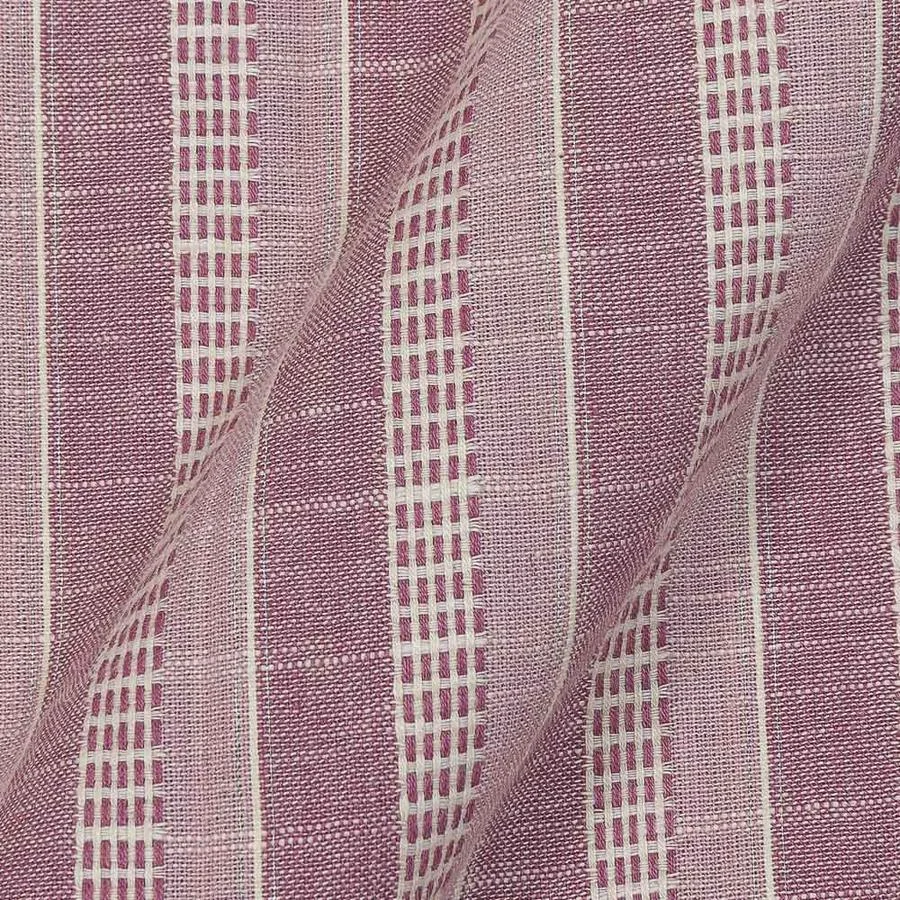
Step 1: Understand the fabric categories you want to source
Bhagalpur is especially recognised for silk textiles, including Tussar-related fabrics. Depending on the supplier and sourcing network, buyers may also enquire about Ghicha, Muga or Tussar-Muga blends, cotton, linen and blended apparel fabrics. Printing and embroidery may be available for selected base fabrics.
Silk fabrics
Explore Tussar, Ghicha, Muga-related and other silk constructions. Ask whether the yarn is reeled or spun, what the fibre composition is, and how the fabric is woven and finished.
Linen fabrics
Specify whether the fabric is 100% linen or a blend, along with yarn characteristics, weave, weight, width and finish.
Cotton fabrics
Discuss cotton type, yarn, weave, GSM, width, dyeing and intended garment application.
Value-added fabrics
For printed or embroidered fabrics, define the base cloth, artwork, repeat, placement, colour references and approval process.
Do not assume that a regional or commercial name fully identifies the fabric. For example, organza describes a sheer construction and is not necessarily silk. Chanderi may use different fibre combinations. Ask for composition and construction details for every item.
Step 2: Prepare a precise fabric requirement sheet
A detailed brief helps suppliers assess feasibility and quote on a comparable basis. “Need premium silk fabric” is too broad to support an accurate quotation. Share measurable requirements wherever possible.
| Specification | What to provide |
|---|---|
| Fibre composition | Exact fibre names and percentages, including any blend. |
| Yarn details | Known yarn type, count or description; state if alternatives are acceptable. |
| Construction | Weave or construction reference, texture and surface appearance. |
| Finished width | Target usable width and acceptable tolerance. |
| Weight | Target GSM or other unit, test method and tolerance. |
| Colour and finish | Physical shade standard, finish, feel and any special treatment. |
| End use | Garment type, season, drape, opacity, durability and care needs. |
| Quantity | Sample quantity, first order, colours/designs and possible repeat volume. |
| Destination | Country, delivery postcode or port, and required delivery window. |
Where you do not know a technical detail, say so. A supplier can propose an option, but the final specification should be written down and approved before production.
Step 3: Identify the real manufacturer or mill-linked supplier
Direct sourcing can simplify communication and make production information easier to obtain, but it does not automatically mean the lowest price or the best quality. A trading supplier may add useful services such as consolidation, quality coordination, sourcing across multiple units and export handling. The important question is whether the supplier is transparent about its role and can deliver the agreed specification.
Questions to ask a prospective supplier
- Where is the fabric woven, processed and finished?
- Do you own the production unit, work with independent weavers, or coordinate with mills?
- Which stages are performed in-house and which are outsourced?
- Can you share current fabric samples and relevant production photographs or videos?
- Who is responsible for inspection, rework and final approval?
- Which legal entity will issue the quotation, invoice and export documents?
- Can you provide references or evidence of relevant export experience, where available?
Verify the supplier’s business identity, address, tax and export details where applicable. Independently verify bank beneficiary information before sending funds. If a supplier claims a certificate, ask to see the current document and confirm that its scope covers the relevant entity, site and product.
Step 4: Compare suppliers on capability, not just price
Request the same brief from each shortlisted supplier. Compare the quoted specification, sample quality, MOQ, production plan, inspection arrangements, payment terms and export scope. A lower price is not directly comparable if the fibre composition, width, GSM, finish or delivery basis differs.
| Evaluation point | Evidence to request | Why it matters |
|---|---|---|
| Product capability | Matching sample and written specification | Confirms the supplier understands the product brief. |
| Production route | Clear explanation of mill, weaver and processor roles | Clarifies accountability and traceability. |
| Quality control | Inspection checklist, test reports if applicable | Shows how acceptance will be assessed. |
| Commercial terms | Itemised quotation and payment milestones | Reduces hidden cost and payment ambiguity. |
| Export readiness | Document list and freight responsibilities | Helps prevent dispatch and customs delays. |
Step 5: Request samples and approve them properly
Sampling is one of the most important stages in fabric sourcing. Ask for available swatches or sample metreage. For a new construction, colour or finish, request a development sample and confirm whether it represents the intended bulk process.
- Send the requirement sheet and reference images or physical swatches.
- Ask the supplier to identify the sample’s composition, construction, width and weight.
- Review hand feel, drape, opacity, surface, colour and visible defects.
- Conduct a garment trial or relevant laboratory test if the end use requires it.
- Record requested corrections and approve a final reference sample in writing.

Step 6: Agree on quality standards before production
Quality should be measurable wherever possible. For apparel fabrics, the relevant parameters depend on the garment and destination market. Agree on what will be inspected, how it will be measured and what variation is acceptable.
- Composition: fibre names and percentages; arrange testing if required.
- GSM: target weight, test method, conditioning and tolerance.
- Width: finished usable width and measurement method.
- Shade: approved physical standard and acceptable lot variation.
- Construction: weave, yarn characteristics and agreed visual features.
- Performance: colourfastness, shrinkage, strength or other tests relevant to end use.
- Defects: inspection method, defect classification and acceptance criteria.
Do not use vague terms such as “export quality” as the only quality standard. Attach the agreed specification and sample identification to the purchase order.
Step 7: Understand MOQ and production planning
There is no universal MOQ for Bhagalpur fabrics. Minimums vary by available stock, yarn procurement, weave, loom setup, dyeing lot, colour, printing, embroidery and customisation. A stock fabric may have a different minimum from a made-to-order development.
The original article’s example of 50–100 metres per colour or design should be treated as an illustration only—not a guaranteed or standard MOQ. Ask each supplier for the actual minimum for your selected fabric.
Ask for separate quantity thresholds
- Swatch or sample metreage.
- Ready-stock purchase quantity.
- Custom colour or finish minimum.
- Custom weave or yarn procurement minimum.
- Repeat-order quantity and whether the original setup can be reused.
Confirm whether MOQ applies per colour, design, construction or total order. Also ask whether production waste, roll length variation or shade-lot requirements affect the final deliverable quantity.
Step 8: Understand what drives fabric pricing
Fabric price is shaped by raw material, yarn, construction, width, GSM, production method, dyeing, finishing, printing, embroidery, quantity, inspection and packing. Handloom and powerloom processes can have different cost structures, but neither method alone guarantees a particular quality level.
Request an itemised quotation with the currency and pricing unit clearly stated—per metre, yard, kilogram or piece. Ask whether the quoted price includes sampling, processing, packing, inland transport, export handling, freight and insurance. Clarify taxes and any additional charges that may apply.
Step 9: Set payment terms and protect the transaction
Payment arrangements are negotiated between buyer and seller. For a first order, an advance or milestone-based payment may be requested, especially when the supplier must procure yarn or begin custom production. Credit terms should never be assumed.
- Confirm the contracting legal entity and invoice details.
- Verify bank beneficiary name and account details independently.
- Agree on advance amount, balance milestone and payment currency.
- Record what happens if samples are rejected or the bulk goods fail inspection.
- Clarify cancellation, delay, refund and bank-charge responsibilities.
- Be cautious about urgent bank-detail changes or requests to pay an unrelated third party.
Step 10: Choose the right Incoterm and delivery responsibility
Incoterms® allocate specified delivery tasks, costs and risks between seller and buyer. The appropriate term depends on transport mode, named delivery point and the parties’ logistics capabilities. Use the Incoterms® 2020 version unless another version is expressly agreed.
| Term | High-level explanation | Buyer should clarify |
|---|---|---|
| EXW | Seller makes goods available at the named place; buyer takes on extensive collection and export arrangements. | Whether the buyer can handle export clearance in India and collect at the stated location. |
| FCA | Seller delivers goods to the carrier or other nominated party at the named place, with export clearance handled as specified by the rule. | Exact handover point, loading and onward transport responsibilities. |
| FOB | For sea or inland waterway transport; delivery and risk transfer occur when goods are on board the nominated vessel at the named port of shipment. | Named port, vessel arrangements and suitability for containerised cargo. |
| CIF | For sea or inland waterway transport; seller arranges cost, insurance and freight to the named destination port, while risk transfers earlier at shipment. | Insurance scope, destination charges and the point where risk transfers. |
| CPT / CIP | Seller pays carriage, and under CIP also obtains specified insurance, to the named destination; risk transfers on delivery to the carrier. | Named destination, insurance level under CIP and carrier handover point. |
| DAP | Seller delivers to the named destination ready for unloading; buyer generally handles import clearance and duties. | Who handles unloading, customs clearance and import taxes. |
| DDP | Seller takes responsibility for delivery with import clearance and duties paid, subject to the seller being able to fulfil destination obligations. | Whether the exporter can lawfully act as importer or meet local tax and customs requirements. |
State the named place or port and the Incoterms® version in the quotation and purchase order. FOB and CIF are not automatically the best choices for every shipment; for containerised cargo or multimodal transport, FCA, CPT or CIP may be more appropriate depending on the arrangement.
Step 11: Plan the shipping route from Bhagalpur
Fabric shipments need an inland movement from the production or consolidation point to a suitable airport, seaport or logistics hub. Kolkata may be one option for some sea-freight routes, but the correct gateway is shipment-specific. Confirm the route with a freight forwarder rather than assuming every Bhagalpur export leaves through the same port.
Common transport options
- Courier: useful for small swatches and documents, subject to destination and customs rules.
- Air freight: may suit urgent or relatively small commercial consignments.
- Sea freight LCL: may suit cargo that does not fill a container, subject to consolidation schedules and charges.
- Sea freight FCL: may suit larger volumes where a full container is commercially appropriate.
Ask for a written freight quotation that identifies the route, transit estimate, cut-off, origin and destination charges, customs handling, insurance and delivery scope. Transit estimates are not guaranteed arrival dates.
Step 12: Prepare export and import documentation
The documents required depend on the product, transaction, destination and customs procedure. A shipment may require a commercial invoice, packing list, export declaration or shipping bill, transport document, certificate of origin where applicable, insurance document where agreed, and product-specific test or compliance records.
Agree on the product description, fibre composition, quantities, values, HS classification, country of origin and consignee details before dispatch. The buyer should verify destination-country tariff classification, duty, labelling and product-safety requirements with its customs broker or competent adviser. Do not assume that a certificate or test is mandatory for every market—or that a voluntary certificate replaces legal compliance.
Step 13: Arrange inspection and approve dispatch
Inspection may be carried out by the supplier, buyer’s representative or an independent inspection company. Define the inspection scope and acceptance criteria in advance. Depending on the order, checks may cover roll count, length, width, GSM, shade, visible defects, packing and labelling.
Schedule inspection early enough to allow correction if issues are found. Decide who pays for inspection, how non-conforming goods will be handled and whether dispatch requires written buyer approval.
Step 14: Confirm packaging and shipment marks
Fabric must be packed to suit the material, route, storage conditions and handling. Discuss roll or folded packing, inner wrapping, moisture protection, outer covering, roll length, net and gross weight, carton or roll marks and palletisation if needed.
Send final label and shipping-mark instructions before packing. If the goods require SKU labels, fibre information, barcode labels or buyer-specific references, approve the artwork and placement in writing.
Step 15: Build a repeatable supplier relationship
After the first order, evaluate the supplier against the approved specification, communication, production schedule, inspection outcome, packing and document accuracy. Record any deviations and agree on corrective action. For repeat orders, keep the approved sample and specification version as the reference; do not rely on an old product name alone.
For colour-sensitive or multi-lot programmes, discuss shade continuity and whether the supplier can reserve or procure matching yarn. Repeatability should be verified rather than assumed.
Common mistakes to avoid when sourcing directly
- Choosing a supplier based only on the lowest price.
- Assuming “direct from mill” means the supplier owns every production stage.
- Ordering bulk without approving a representative sample.
- Leaving composition, width, GSM and tolerances undefined.
- Assuming one MOQ applies to every fabric, colour or custom development.
- Confusing a shipping estimate with a guaranteed delivery date.
- Using an Incoterm without a named place or version.
- Sending funds before verifying the legal entity and bank beneficiary.
- Assuming all natural fibres or handloom fabrics are automatically sustainable or compliant.
- Failing to check destination-market labelling, testing and import requirements.
Why consider Weaveify for Bhagalpur fabric sourcing?
Weaveify is a Bhagalpur-based textile business serving apparel fabric enquiries and international sourcing requirements. Buyers can discuss silk, linen, cotton and selected value-added fabric developments, subject to current availability and production feasibility. For each enquiry, the exact specification, sample options, MOQ, price, quality checks, payment terms and export arrangements should be confirmed in writing.
Learn more about Weaveify, review the infrastructure information, or browse the fabric collections.
Buyer checklist: before placing your first order
- Have you supplied a complete fabric requirement sheet?
- Have you confirmed who manufactures, processes and exports the goods?
- Have you verified the supplier’s legal and payment details?
- Have you received and approved a representative physical sample?
- Are composition, GSM, width, colour and tolerances documented?
- Are MOQ, price unit, currency and all additional charges clear?
- Are payment milestones and remedies documented?
- Are Incoterm, named place, route and freight responsibilities clear?
- Are inspection and testing requirements agreed?
- Have destination import, labelling and compliance requirements been checked?
Frequently asked questions
1. How do I source fabrics directly from Bhagalpur mills?
Prepare a fabric specification, identify suppliers with relevant production connections, verify their business details, request samples, compare written quotations and approve quality and delivery terms before bulk production.
2. Which fabrics is Bhagalpur known for?
Bhagalpur is widely associated with silk weaving, including Tussar-related textiles. Buyers may also enquire about other silk varieties, cotton, linen and blended fabrics, depending on supplier capability.
3. Can overseas buyers purchase from Bhagalpur suppliers?
Yes. Buyers can work with suppliers that support export transactions. Confirm the legal exporter, payment route, documentation responsibilities and shipping arrangement for your destination.
4. How can I tell whether a supplier is a real manufacturer?
Ask where each production stage takes place, whether the supplier owns or coordinates the mill or weaving units, who controls quality and which entity invoices and exports the goods. Verify the claims with appropriate evidence.
5. Is buying directly from a mill always cheaper?
No. Direct sourcing may reduce some intermediary costs, but total value depends on price, service, quality, consolidation, inspection, logistics and order quantity. Compare equivalent specifications and delivery terms.
6. What information should I send when requesting a quote?
Share fibre composition, weave, width, GSM, colour, finish, quantity, intended apparel use, destination, sample needs and target delivery window. Attach a reference swatch or image if possible.
7. What is the MOQ for Bhagalpur fabric?
There is no single standard MOQ. It varies with stock, yarn, construction, colour, processing and customisation. Ask for separate sample, stock and custom-production minimums.
8. Is 50–100 metres a guaranteed MOQ?
No. Such quantities may be examples in some offers, but they are not a universal Bhagalpur standard. Obtain a current MOQ for the exact fabric and colour.
9. Can I get samples before placing a bulk order?
Ask for swatches or sample metreage. Confirm the sample’s composition and construction, sample charges, courier cost and whether it represents the planned bulk process.
10. How should I approve a fabric sample?
Check hand feel, drape, opacity, shade, width, weight, construction and finish. Arrange garment trials or laboratory tests if required, then record approval against a clearly identified physical reference.
11. Can I customise GSM, width, weave and colour?
Customisation may be possible depending on production capability, raw material and MOQ. Share target values and tolerances and approve a development sample before bulk production.
12. What affects fabric prices?
Fibre and yarn, construction, width, GSM, production method, dyeing, finishing, printing, embroidery, quantity, inspection and packing all influence price. Compare quotations on the same specification and Incoterm basis.
13. Which payment terms are common for first orders?
Terms are negotiated and may include an advance or milestone payments. Confirm the contracting entity, beneficiary, currency, milestones, bank charges and refund or cancellation terms before payment.
14. Which Incoterm should I choose?
Choose based on transport mode, named delivery point and each party’s logistics capabilities. State the Incoterms® version and exact named place. FCA, CPT or CIP may suit some container or multimodal shipments better than FOB or CIF.
15. Are Bhagalpur exports always shipped through Kolkata?
No single port should be assumed for every shipment. The gateway depends on the route, cargo, forwarder, service and destination. Ask for a shipment-specific logistics plan.
16. Is air freight or sea freight better?
Air freight may suit samples or urgent smaller cargo. Sea freight may be more economical for larger shipments, depending on volume and schedule. Compare complete door-to-door or port-to-port costs.
17. Which documents are needed for fabric exports?
Common documents may include a commercial invoice, packing list, export declaration or shipping bill and transport document. A certificate of origin, insurance or test reports may be required depending on the transaction and destination.
18. Can I arrange third-party inspection?
Yes, by agreement. Define inspection timing, sampling plan, test methods, acceptance criteria, cost and the procedure if goods fail inspection.
19. How do I ensure repeat-order consistency?
Retain the approved sample and specification, record shade and lot references, agree tolerances and inspect repeat orders. Ask the supplier to confirm raw-material and process availability before accepting a repeat schedule.
20. How can I contact Weaveify for sourcing?
Use the Weaveify contact page and include your fabric type, specifications, quantity, destination and sample requirements. This helps the team assess the enquiry more accurately.
Ready to discuss your Bhagalpur fabric requirement?
Send your product brief with fibre composition, weave, GSM, width, colour, finish, quantity and destination country. Weaveify can review the enquiry and discuss available sourcing and development options.
Important: All availability, MOQ, price, sample, lead-time, testing, certification and shipping details are specific to the product and transaction. Confirm current terms in a written quotation and purchase agreement. Buyers should independently verify applicable destination-market customs, fibre-labelling, chemical and product-safety requirements.