
What Is Chanderi Silk Fabric? Uses, Characteristics and Apparel Buyer Guide
Chanderi is a celebrated Indian handloom textile known for its lightweight character, fine weave and graceful sheen. Often associated with a blend of silk and cotton, Chanderi can bring a balance of visual elegance and wearability to traditional and contemporary apparel.
For fashion labels, garment manufacturers and international fabric buyers, understanding Chanderi means looking beyond the name. Fibre composition, yarn, weave, zari, weight and finishing can vary. This guide explains Chanderi's origins, characteristics, apparel uses, GSM considerations, quality checks and sourcing requirements.
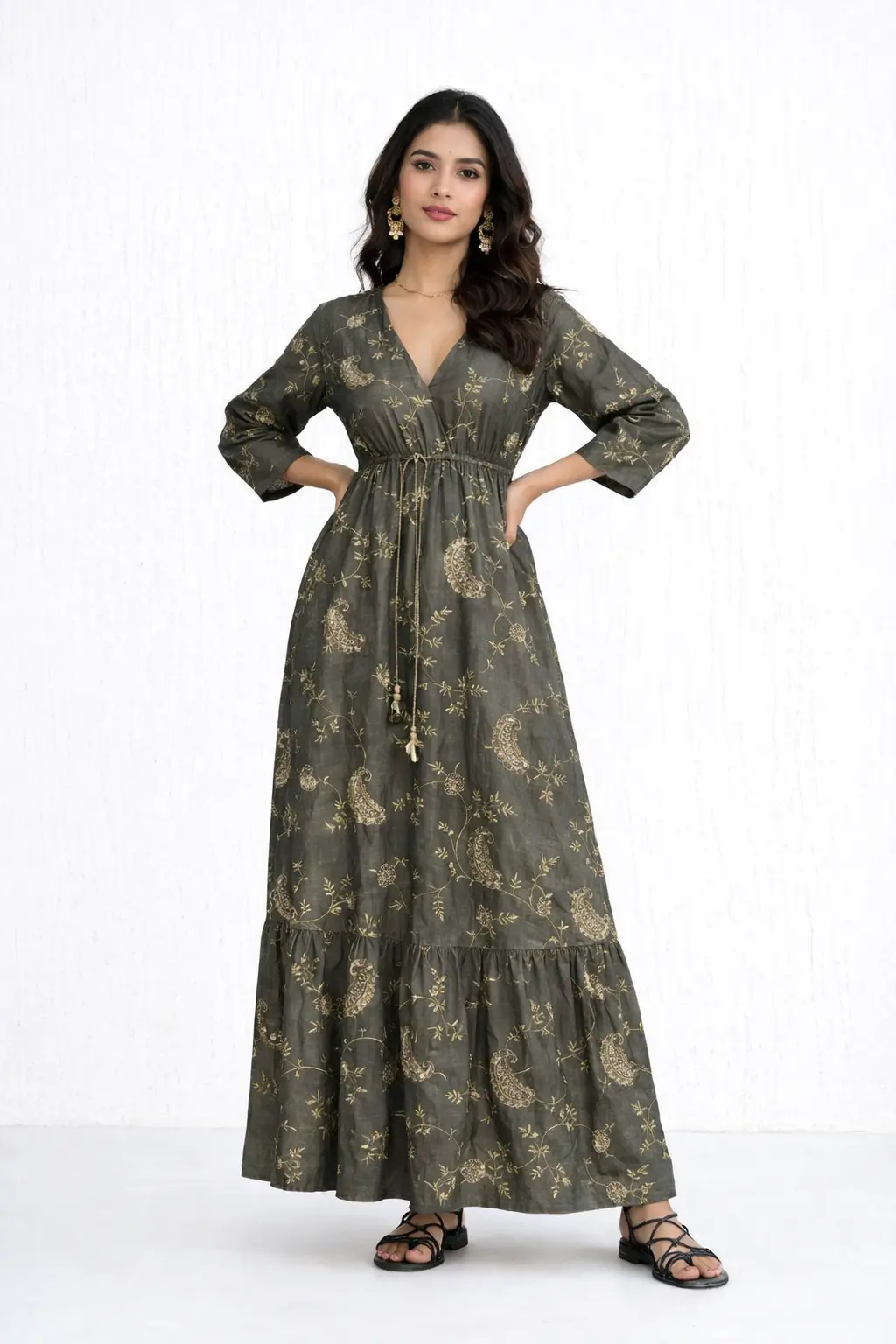
1. What Is Chanderi Fabric?
Chanderi is a traditional Indian textile associated with the town of Chanderi in Madhya Pradesh. It is recognised for its fine, lightweight fabric construction, subtle sheen and often semi-sheer appearance. Traditional Chanderi weaving commonly combines silk and cotton yarns, and some designs incorporate zari or decorative motifs.
The name “Chanderi” refers to a textile tradition and style of weaving rather than one fixed fibre recipe. Chanderi fabrics may be silk-cotton blends, cotton-based, silk-based or other constructions depending on the product. Therefore, it is inaccurate to assume that every fabric sold as Chanderi is 100% silk.
2. Origin and Weaving Heritage of Chanderi
Chanderi, in Madhya Pradesh, is known for a long-standing weaving tradition. The textile's identity has been shaped by fine yarns, lightweight constructions, traditional motifs and the skills of weaving communities. Chanderi fabrics are often recognised by their delicate appearance and a balance between lightness and structure.
Traditional motifs can include buti patterns, floral elements, geometric details and borders. Zari may be used to create decorative accents, depending on the design and product. Contemporary interpretations also include plain, minimal and fashion-led versions suited to modern apparel collections.
For buyers, provenance and production method should be verified if a product is being marketed specifically as handwoven Chanderi or as originating from a particular weaving cluster. A fabric name alone is not proof of geographic origin or a specific production technique.

3. Chanderi Fibre Composition, Silk and Zari
Traditional Chanderi is commonly associated with silk and cotton yarns, but the actual blend can vary. The composition affects price, hand feel, breathability, drape, care and the way the fabric behaves during garment construction.
Silk-cotton Chanderi
A silk-cotton blend combines the character of both fibres. Depending on yarn quality and proportion, the fabric may have a soft sheen, light feel and a balance of body and drape. Buyers should confirm the exact silk and cotton percentages rather than relying on a general blend description.
Silk-rich or silk-based Chanderi
Some Chanderi products use a higher proportion of silk or silk-based yarns. These may be positioned for premium apparel, but the fibre claim should be supported by a clear specification and, where necessary, suitable testing.
Cotton-based Chanderi
Cotton-based versions may offer a different hand feel and price point. Their performance depends on yarn count, weave density, finishing and any additional fibres or decorative yarns.
Zari and decorative yarns
Zari may be incorporated into borders, motifs or all-over designs. Buyers should ask what the zari is made from and whether it is metallic, metallised or another decorative yarn. Do not assume that every zari detail contains precious metal. Decorative yarns may affect care, abrasion and finishing requirements.
4. Key Characteristics of Chanderi Fabric
Lightweight construction
Many Chanderi fabrics are light in weight, making them useful for garments that need a refined appearance without a heavy fabric feel.
Fine weave
The fabric is often recognised for its fine construction. The exact density and surface depend on the yarn and weaving specification.
Subtle sheen
Silk yarns and fabric construction can contribute to a soft lustre. The degree of shine varies by composition and finish.
Semi-sheer appearance
Some Chanderi fabrics are translucent or semi-sheer. Opacity should be assessed on the actual colour and construction, particularly for dresses and tops.
Soft yet defined drape
Chanderi can offer a balance of softness and body. It is not identical to the fluid drape of every lightweight silk fabric.
Decorative versatility
Plain surfaces, woven motifs, borders and zari details provide options for minimal, traditional and festive apparel.
These are common characteristics, not guaranteed specifications for every fabric sold under the Chanderi name. Always evaluate the proposed construction and sample.
5. Types and Variations of Chanderi Fabric
Plain Chanderi
Plain Chanderi offers a relatively minimal surface and can be used for tunics, dresses, kurtas, shirts and contemporary separates. Its suitability depends on opacity, body and composition.
Buti and motif Chanderi
Small woven motifs or butis add detail across the fabric. Buyers should assess motif scale, spacing, repeat, placement and how the design will appear after garment cutting.
Zari Chanderi
Zari details may be woven into borders or motifs to create a festive or decorative effect. Confirm the zari material, durability and care requirements, especially if the garment will be worn frequently.
Printed Chanderi
Suitable Chanderi bases may be developed with printing. The print method and ink system must be compatible with the fibre blend and fabric surface. Approve a print sample on the actual base before bulk production.
Embroidered Chanderi
Embroidery can add surface detail to selected Chanderi constructions. The fabric's lightweight nature means stitch density, backing, thread weight and placement need careful testing to prevent puckering or distortion.
Explore Chanderi silk fabric, as well as Weaveify's printed fabrics and embroidered fabrics.
6. Uses of Chanderi Fabric in Apparel and Fashion
Kurtas and tunics
Chanderi is commonly used for traditional and contemporary kurtas, tunics and coordinated sets. Check opacity, lining needs and seam construction.
Dresses and tops
Lightweight constructions can suit dresses, tops and blouses, depending on drape, transparency and the garment's structure.
Dupattas and overlays
Its light character and decorative possibilities make Chanderi useful for dupattas, overlays and layered apparel pieces.
Festive and occasion wear
Motifs, borders and zari details can support festive garments and occasion collections without necessarily using a heavy base fabric.
Contemporary separates
Plain or minimal Chanderi may be considered for shirts, skirts, co-ord sets and modern ethnic-fusion designs.
Designer collections
Its textile heritage and distinctive surface can provide material interest for limited collections and design-led apparel.
Chanderi is not automatically suitable for every climate or all-day use. Comfort depends on fibre composition, weave, finishing, garment design, lining and the wearer's preferences.
7. Chanderi GSM, Width and Fabric Construction
GSM means grams per square metre. It measures fabric mass per unit area, but it does not by itself determine quality, thickness, opacity or drape. Two Chanderi fabrics with the same GSM may feel and perform differently because of fibre composition, yarn, weave and finishing.
There is no single universal GSM range for all Chanderi. Select weight according to the intended garment and confirm the finished specification with the supplier. A lightweight dupatta, a lined dress and a structured kurta may require different fabric behaviour.
| Application | What to assess | Why it matters |
|---|---|---|
| Dupatta or overlay | Lightness, transparency, width and edge finish | Fall, coverage and finishing quality |
| Kurtas and tunics | Body, opacity, GSM and seam stability | Comfort, coverage and garment shape |
| Dresses and tops | Drape, lining requirement, width and dimensional stability | Silhouette and ease of construction |
| Festive apparel | Zari or motif durability, weight and surface | Appearance, handling and care |
What to include in a Chanderi specification
- Exact fibre composition and percentage of each fibre.
- Weave or construction and whether the fabric is handwoven or machine-made, if relevant to the order.
- Finished GSM and acceptable tolerance.
- Finished usable width and selvedge details.
- Motif, buti, border and zari specifications, where applicable.
- Colour, shade reference and finishing treatment.
- Inspection criteria and relevant performance tests.
Confirm whether the quoted GSM and width are measured before or after finishing. Processing may affect the finished measurements.
8. Chanderi Silk vs Organza Silk
Chanderi and organza can both be lightweight and may have a degree of transparency, but they are not interchangeable. Their structure, hand feel and garment applications can differ significantly.
| Feature | Chanderi | Organza |
|---|---|---|
| Textile identity | Traditional textile associated with Chanderi, Madhya Pradesh | A sheer fabric construction available in different fibres |
| Composition | Often silk-cotton; other compositions exist | May be silk, polyester or another fibre |
| Surface | Fine, often softly lustrous; motifs or zari may be present | Sheer, usually crisp and structured |
| Hand feel | Varies by blend and construction; often soft with some body | Generally crisp or firm relative to many soft apparel fabrics |
| Common uses | Kurtas, dresses, dupattas, tunics and festive apparel | Overlays, sleeves, panels, volume and occasion details |
| Buyer priority | Verify composition, weave, motif and transparency | Verify fibre, stiffness, transparency and edge handling |
Explore organza silk fabric to compare suitable options for your garment concept.
9. How to Select the Right Chanderi Fabric
- Define the garment: Identify the product category, silhouette, season, target customer and retail positioning.
- Confirm composition: Specify silk, cotton and any other fibre percentages. Do not rely on the name “Chanderi silk” alone.
- Choose the surface: Decide between plain, buti, woven motif, zari, printed or embroidered options.
- Set the technical requirements: Agree GSM, width, weave, opacity, drape, colour and finishing.
- Evaluate a physical sample: Check the fabric under suitable lighting and assess it against the garment pattern.
- Test processing: If printing, embroidery, washing or special finishing is required, trial the actual fabric first.
- Approve in writing: Retain an approved swatch and document composition, measurements, shade and tolerances before bulk production.
10. Chanderi Fabric Quality Inspection
Because Chanderi is often lightweight and may include delicate decorative yarns, inspection should cover both the base fabric and any motifs, zari or embroidery. Agree the acceptable level of natural variation and defects before production.
Inspection checklist
- Composition: Confirm fibre content and arrange suitable testing where the composition claim is critical.
- Weave consistency: Check for broken ends, missing picks, holes, uneven density and unintended streaks.
- Surface and motifs: Review motif scale, spacing, alignment and repeat consistency.
- Zari quality: Check decorative yarn placement, loose ends, snagging and surface damage.
- Shade: Compare rolls and lots against the approved reference under consistent lighting.
- GSM and width: Measure finished weight and usable width against agreed tolerances.
- Dimensional stability: Test shrinkage or distortion using the intended care or processing method.
- Colour fastness: Agree relevant rubbing, washing or perspiration tests based on the end use.
- Roll condition: Inspect for stains, moisture damage, creases, packing marks and incorrect roll identification.
Not every test is necessary for every product. Confirm the test method, laboratory, sample condition and acceptance limits before bulk production.
11. Garment Manufacturing Considerations for Chanderi
Lightweight Chanderi can require careful handling during cutting, sewing and finishing. Its behaviour depends on composition and construction, so a pre-production trial is useful before committing to a full garment order.
Cutting and preparation
- Inspect the fabric before spreading and identify shade or motif variations.
- Allow the fabric to relax or condition according to the supplier's and factory's recommendations.
- Use the actual finished usable width when calculating marker efficiency.
- Plan pattern placement for borders, butis and directional motifs.
- Consider lining where transparency or garment coverage requires it.
Sewing and finishing
- Test needle, thread, stitch length and seam construction on the actual fabric.
- Choose seam finishes suitable for a lightweight construction and its fraying behaviour.
- Use suitable interfacing only where needed, after checking that it does not alter the fabric's drape.
- Test pressing temperature and pressure on a sample, especially where zari or delicate yarns are present.
- Inspect finished garments for puckering, pulls, seam damage and visible pressing marks.
12. Sourcing Chanderi Fabric from India
India has a broad textile ecosystem, and Chanderi is associated with a specific weaving heritage in Madhya Pradesh. Buyers looking for authentic handwoven Chanderi should verify the production origin and method. Buyers sourcing a Chanderi-style fabric should still define the exact construction and composition clearly.
Step 1: Prepare a sourcing brief
Include fibre composition, construction, GSM, width, colour, motif or border details, zari requirements, intended garment, quantity and destination country. Attach a physical swatch or reference image where possible.
Step 2: Verify supplier capability and origin claims
Ask whether the supplier manufactures, sources or coordinates the fabric. If handloom or geographic origin is important, request relevant supporting details. Clarify which stages—yarn sourcing, weaving, dyeing, printing, embroidery, finishing and inspection—are performed directly or through partners.
Step 3: Request representative samples
Evaluate a sample made from the same or closest possible construction to the proposed order. Check composition, hand feel, motif, transparency, GSM, width and sewing behaviour.
Step 4: Confirm commercial terms
Agree MOQ, sample and development charges, price unit, payment schedule, production lead time, quality tolerances, packing and inspection arrangements in writing.
Step 5: Confirm export arrangements
Agree the applicable Incoterms rule and named place, freight and insurance responsibilities, customs documentation, country-of-origin requirements and destination-market obligations. Confirm the tariff classification for the exact composition and construction with a qualified customs or trade professional.
Explore Weaveify Chanderi silk fabric and learn about the company's textile infrastructure.
13. Chanderi Fabric Pricing, MOQ and Order Planning
Chanderi pricing depends on fibre composition, yarn quality, weaving method, motif complexity, zari, weight, finishing, quantity and market availability. A silk-rich handwoven construction should not be compared directly with a different cotton-based or machine-made fabric simply because both are described as Chanderi.
Factors that affect cost
- Silk, cotton and other fibre percentages.
- Yarn quality, weave density and production method.
- GSM, width, usable yield and fabric construction.
- Buti, motif, border, zari and other design complexity.
- Printing, embroidery, dyeing and finishing treatments.
- Order quantity, colourways and custom development.
- Testing, inspection, packing, documentation and logistics.
MOQ and lead time are supplier- and project-specific. Custom motifs, special yarns, zari or handloom production may require different minimums and development time. Request a written quotation that separates sample charges, production price and logistics.
14. Chanderi Fabric from Weaveify
Weaveify is an India-based textile manufacturer, order supplier and exporter focused on fabrics for apparel applications. Its fabric range includes Chanderi and other silk varieties, along with suitable printed and embroidered fabric options.
Depending on the selected construction and project, buyers can discuss:
- Plain Chanderi fabric options for apparel.
- Chanderi with suitable woven motifs or decorative details, subject to availability.
- Digital printed Chanderi on compatible base fabrics.
- Embroidered Chanderi developments, subject to fabric suitability and design requirements.
- Composition, GSM, width, sampling, production planning and export coordination.
Fibre composition, weaving method, origin, MOQ, sample charges, lead time and technical specifications are confirmed for each enquiry. If a specific handloom origin or fibre claim is required, it should be documented before order confirmation.
Looking for Chanderi fabric for your apparel collection?
Share your required composition, construction, GSM, width, colour, motif or zari details, intended garment and estimated quantity. Weaveify can review your requirement and discuss suitable fabric options and sampling.
Explore Chanderi silk fabric | Contact Weaveify for a sourcing enquiry
15. Frequently Asked Questions
1. What is Chanderi silk fabric?
Chanderi is a traditional Indian textile associated with Chanderi in Madhya Pradesh. It is known for fine, lightweight constructions and a subtle sheen. Traditional versions commonly use silk and cotton yarns, but composition varies.
2. Is Chanderi fabric always 100% silk?
No. Chanderi may be made from silk-cotton blends, cotton-based constructions, silk-rich fabrics or other combinations. Confirm the exact fibre percentages with the supplier.
3. Where does Chanderi fabric originate?
Chanderi is associated with the town of Chanderi in Madhya Pradesh, India, which has a long-standing textile and weaving heritage.
4. What are the main characteristics of Chanderi?
Common characteristics include a lightweight construction, fine weave, subtle sheen and, in some versions, a semi-sheer appearance. Motifs and zari may also be incorporated.
5. What is Chanderi fabric used for?
It is used for kurtas, tunics, dresses, tops, dupattas, overlays and festive or occasion apparel, depending on the fabric's composition and construction.
6. Is Chanderi suitable for daily wear?
Some Chanderi fabrics can be suitable for regular wear, but comfort depends on fibre composition, weave, finishing, garment design and care requirements. Delicate zari or decorative versions may need more careful handling.
7. What GSM is best for Chanderi fabric?
There is no universal ideal GSM. Select the weight based on the intended garment and confirm the finished GSM, width, opacity and drape using a sample.
8. Is Chanderi fabric transparent?
Some Chanderi constructions are semi-sheer, while others provide more coverage. Transparency depends on yarn, weave density, colour and finishing. Check the actual fabric before deciding whether lining is needed.
9. What is zari in Chanderi fabric?
Zari is a decorative yarn used in motifs, borders or other woven details. Its material and construction can vary, so confirm the exact type and care requirements.
10. What is the difference between Chanderi and organza?
Chanderi is a traditional textile associated with a specific Indian weaving heritage and commonly uses silk and cotton yarns. Organza is a sheer, crisp fabric construction that can be made from silk or other fibres.
11. Can Chanderi fabric be digitally printed?
Suitable Chanderi base fabrics can be printed using a compatible process. The ink system and process must suit the fibre blend and construction, and a physical sample should be approved first.
12. Can Chanderi fabric be embroidered?
Yes, suitable constructions can be embroidered. Test stitch density, backing, thread, placement and fabric stability to reduce puckering or distortion.
13. How do I check Chanderi fabric quality?
Confirm composition, weave, GSM, width, shade, motif consistency, zari details and finishing. Inspect for defects and agree relevant performance tests before bulk production.
14. Does Chanderi fabric shrink?
Dimensional change depends on fibre blend, weave, dyeing and finishing. Test the actual fabric using the intended care method and agree acceptable shrinkage limits before garment production.
15. Does Weaveify supply Chanderi fabric to international buyers?
Weaveify offers Chanderi fabric options for apparel applications, subject to availability and project specifications. Buyers can contact the team with their composition, GSM, width, design and quantity requirements.
Final Thoughts
Chanderi offers apparel designers a distinctive combination of textile heritage, lightweight construction and decorative versatility. It can be used in traditional and contemporary collections, but the right selection depends on the exact fibre composition, weave, weight, transparency and finish.
For reliable sourcing, define the fabric specification clearly, verify origin and production claims where they matter, and approve a representative physical sample before bulk production. These steps help ensure that the delivered fabric matches the garment design and buyer expectations.
Explore the Weaveify Chanderi fabric range, browse the wider silk collection or learn more about Weaveify.
Further Reading
- Complete Guide to Silk Fabric for Apparel Manufacturing
- Organza Silk Fabric
- Tussar Silk Fabric
- Muga Silk Fabric
- Raw Silk Fabric
- Digital Printed Fabrics
- Embroidered Fabrics
Article body prepared for the existing Weaveify blog page. Keep the website's existing header and footer outside this content block.
Pingback: Complete Guide To Silk Fabric For Apparel Manufacturing