
Complete Guide to Embroidered Fabrics for Apparel Manufacturing
Embroidered fabric adds texture, dimension and design detail to clothing. From subtle thread motifs on cotton and linen to elaborate embellishment on silk and organza, embroidery can help transform a base textile into a distinctive apparel material. The right result depends on choosing a suitable base fabric, selecting the correct embroidery technique and controlling quality throughout development and production.
This guide explains the main types of embroidered fabrics, common techniques, suitable base materials, GSM considerations, garment applications, sampling, quality checks and sourcing considerations for apparel manufacturing.
Cotton embroideryLinen embroiderySilk embroideryOrganza embroidery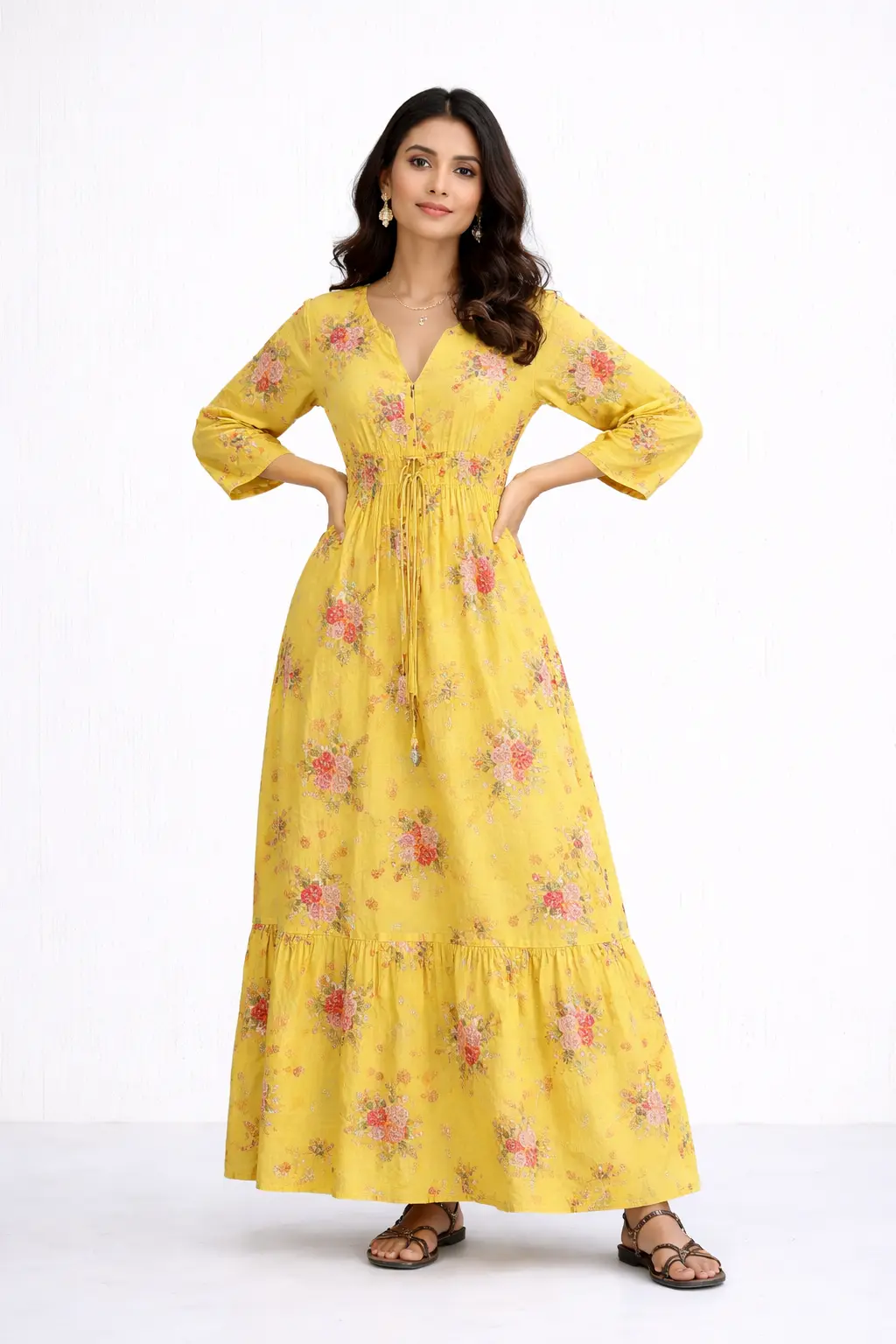
1. What Are Embroidered Fabrics?
Embroidered fabrics are textiles decorated with stitched designs using thread, yarn or other suitable decorative materials. The embroidery is applied to a base fabric to create patterns, motifs, borders, textures or all-over designs.
Embroidery can be produced by hand or by machine. The choice affects the appearance, production time, repeatability, cost and suitability for different order quantities.
Hand embroidery
Stitches are created manually by an artisan. It can provide intricate detail and a handcrafted character, although output and appearance may vary by artisan and piece.
Computerised machine embroidery
Digital embroidery files guide machine stitching. It can support repeatable motifs and more consistent production when the artwork, machine settings and process are controlled.
Embroidery can be applied as a small placement motif, a border, a panel or an all-over pattern. The best construction depends on the garment design, base fabric, intended drape and required durability.
2. Types of Base Fabrics Used for Embroidery
The base fabric influences how the embroidery looks, feels and performs. Fabric weight, weave, surface stability, stretch and transparency all affect the result. Always test the chosen embroidery design on the actual base material.
Cotton embroidered fabric
Cotton can be suitable for shirts, dresses, tunics, casualwear and selected ethnic apparel. Its suitability depends on the weave, weight, yarn, stabiliser and embroidery density.
Linen embroidered fabric
Linen offers a natural texture that can complement minimal, decorative and resortwear designs. Test puckering and distortion, especially with dense embroidery or large motifs.
Silk embroidered fabric
Silk and silk-blend bases can create refined surfaces for premium apparel and occasionwear. Fine or delicate constructions may need careful stabilisation and low-tension handling.
Organza embroidered fabric
Organza is sheer and structured, making it useful for overlays, sleeves, panels and decorative layers. The embroidery backing and exposed reverse may be especially visible.
Other base fabrics may also be embroidered where their construction and performance allow. Ask the supplier to test the motif, stabiliser and thread combination on the exact material intended for production.

3. Common Embroidery Techniques for Apparel Fabrics
Different techniques create different visual effects. The technique should be selected according to the design artwork, base fabric, garment construction, production quantity and target cost.
Hand embroidery
Manual needlework can create detailed and individual motifs. It is often selected for craft-led, decorative or premium designs where artisan work is part of the product concept.
Computerised machine embroidery
Machine stitching can reproduce digitised designs across multiple pieces. It is useful for repeatable motifs and production planning, subject to machine field size and material handling.
Thread embroidery
Uses coloured threads to build outlines, fills, textures and decorative motifs. Thread choice and stitch construction affect appearance, surface feel and care performance.
Zari and metallic-thread embroidery
Uses metallic-effect threads or decorative elements for festive and occasionwear. Check abrasion, snagging, colour stability and care instructions for the selected materials.
Placement embroidery
A motif is positioned in a specific garment area, such as a yoke, cuff, pocket, collar or front panel. Accurate placement and cutting marks are essential.
All-over embroidery
Motifs cover much or all of the fabric surface. It can create a rich appearance but may increase weight, stiffness, production time and material cost.
Technique names can describe different production methods across suppliers. Ask for a physical sample and a clear description of the thread, stitch, backing and process rather than relying on the technique name alone.
4. Embroidery Design Elements: Thread, Stitch and Motif
The design is only one part of the finished result. Thread quality, stitch density, stitch direction, backing and the way the fabric is held during production can all influence the outcome.
Important design details to specify
- Artwork: Provide a clean, high-resolution design file or vector artwork where available.
- Motif dimensions: State the finished width and height, not just the digital artwork size.
- Placement: Mark the exact position relative to fabric edges, garment seams and cutting lines.
- Thread colours: Provide physical thread references or agreed colour standards where accurate matching is important.
- Stitch density: Balance coverage and detail against fabric weight, flexibility and risk of puckering.
- Backing or stabiliser: Confirm the backing type, whether it remains or is removed, and how the reverse side should look.
- Edge finish: Agree how loose threads, jump stitches and exposed backing should be controlled.
- Repeat and alignment: For repeating patterns, specify spacing, direction, border alignment and acceptable variation.
5. GSM and Fabric Weight Considerations
GSM means grams per square metre and is one way to describe fabric weight. With embroidered fabric, the final weight depends on both the base fabric and the embroidery materials. Thread coverage, stitch density, backing and decorative elements can change the finished weight and drape.
| Base fabric category | Indicative GSM reference | What to consider |
|---|---|---|
| Cotton | 120–200 GSM | Suitable range depends on weave, garment and embroidery coverage |
| Linen | 140–220 GSM | Check natural texture, stability and puckering around dense stitches |
| Silk | 100–200 GSM | Very dependent on silk type and construction; delicate bases may need lighter designs |
| Organza | 50–120 GSM | Sheerness and structure make backing and reverse-side finish important |
These are broad planning references from the source guide, not universal specifications or fixed standards for embroidered fabric. Confirm the base-fabric GSM and finished embroidered-fabric weight separately on the actual sample.
6. Benefits of Embroidered Fabrics in Apparel Manufacturing
Texture and dimension
Stitched details create a raised or textured surface that can make a garment visually distinctive.
Design differentiation
Custom motifs and placement can help a collection develop a recognisable visual identity.
Versatile applications
Embroidery can be used in traditional, contemporary, casual, premium and occasionwear designs.
Custom development
Brands can adapt motif size, colour, coverage and placement to suit their own design brief.
Embroidery can also add cost, weight, stiffness and care complexity. Its value should be assessed against the garment's target customer, selling price and expected use.
7. Applications in Apparel Manufacturing
Embroidered fabrics can be used in many clothing categories. The base fabric and embroidery design should be selected to suit the garment's movement, construction and care needs.
Luxury and bridal wear
Decorative silk, organza and other suitable bases may be used for overlays, panels, special-occasion dresses and bridal-inspired garments.
Fashion apparel
Embroidered cotton and linen can be considered for dresses, tops, shirts, jackets, tunics and co-ordinated sets.
Boutique collections
Placement motifs and limited-run designs can support capsule collections and distinctive boutique products.
Traditional and occasionwear
Decorative borders, metallic-effect threadwork and detailed motifs can be incorporated into festive and cultural apparel.
Before cutting, consider how the motif will sit on garment panels, seams, darts and hems. Placement embroidery often requires a cutting and sewing plan that is coordinated with the embroidery supplier.
8. How to Develop Custom Embroidered Fabric
A clear development process helps reduce sample revisions and avoid costly bulk mistakes. Use the following sequence for a new design.
- Define the garment: Identify the product, base fabric, target customer, intended use and required drape.
- Prepare artwork: Share motif files, dimensions, repeat, colour references and placement information.
- Select thread and technique: Discuss thread type, stitch method, density, backing and any decorative elements.
- Make a sample: Request a physical sample on the intended base fabric, not a substitute material unless agreed.
- Evaluate the sample: Check appearance, hand-feel, puckering, reverse side, weight, flexibility and any exposed backing.
- Test garment behaviour: Where relevant, test sewing, pressing, washing or dry-cleaning performance according to intended care.
- Approve a reference: Sign off the sample and record tolerances, thread colours, dimensions and revision date.
- Confirm bulk production: Agree quantity, price, lead time, inspection criteria, packaging and delivery terms in writing.
9. Quality Control: What Buyers Should Inspect
Embroidery quality should be checked on both the face and reverse of the fabric. A visually attractive motif may still create problems if the fabric puckers, the backing is uncomfortable or the stitches are not secure.
| Inspection point | What to check |
|---|---|
| Design accuracy | Motif shape, dimensions, colours, placement and repeat alignment |
| Stitch quality | Skipped stitches, broken threads, loose loops, uneven density and jump stitches |
| Fabric condition | Holes, pulls, snags, distortion, stains and unwanted marks |
| Puckering | Gathering or distortion around motifs and embroidery edges |
| Backing | Excess backing, rough areas, residue or uncomfortable contact with skin |
| Colour | Thread shade consistency and any colour transfer or bleeding risk |
| Weight and handle | Finished GSM, flexibility, drape and stiffness compared with the approved sample |
| Durability | Stitch security and performance under the intended care method |
Agree defect definitions and acceptance tolerances before production. For higher-value orders, consider an independent inspection and retain a sample from the approved production lot.
10. Washing, Care and Durability Considerations
Care instructions depend on the base fabric, thread, backing, decorative elements and garment construction. Do not assume that every embroidered textile can be washed in the same way.
- Test the intended wash or cleaning process on a representative sample.
- Check for thread shrinkage, colour bleeding, puckering and distortion.
- Assess whether metallic or decorative threads are compatible with the proposed care method.
- Check whether backing becomes visible, stiff or uncomfortable after cleaning.
- Provide care instructions that match the tested garment and its components.
- For delicate silk or embellished items, consider whether professional cleaning is more appropriate; confirm through testing and specialist advice.
11. Factors That Affect Embroidered Fabric Pricing
Embroidery cost is influenced by the design and the base material. A simple motif on a stable cotton fabric will generally require a different process from dense all-over work on a delicate silk or sheer organza.
- Base fabric type, composition, GSM and width
- Embroidery technique and production method
- Stitch count, density, coverage and motif complexity
- Thread type, number of colours and decorative materials
- Backing or stabiliser requirements
- Number of placements, repeats and alignment requirements
- Order quantity, setup, digitising and sampling charges
- Inspection, packaging, freight and delivery requirements
Ask suppliers to quote against the same technical specification. Clarify whether the price includes base fabric, embroidery, sampling, digitising, backing, finishing and packing. Compare the total cost per usable metre, not just the embroidery charge.
12. MOQ, Sampling and Production Lead Times
Minimum order quantities and lead times vary by base fabric, embroidery method, design complexity, number of colours and production setup. Custom embroidery may require artwork digitising and sample approval before bulk work can begin.
| Stage | Indicative planning guidance | Confirm with supplier |
|---|---|---|
| Design review | Depends on artwork readiness | File format, digitising, technical feasibility and setup charges |
| Sample development | Allow time for sample creation and revisions | Sample quantity, charges and courier cost |
| MOQ | Varies by base fabric and embroidery setup | Minimum metres, colours, motifs and order value |
| Bulk production | Depends on stitch count, coverage and capacity | Written schedule and inspection milestones |
| Custom finishing | May add processing time | Backing removal, washing, pressing and packing |
Do not apply a generic MOQ or production timeline to every embroidery design. Request a project-specific quotation and schedule after the artwork and base fabric have been reviewed.
13. Sourcing Embroidered Fabrics for International Markets
Embroidery styles and garment applications vary across markets and customer segments. Use market research and buyer feedback to decide which design direction to develop.
Europe
Some brands may prefer restrained, artistic or placement embroidery for contemporary apparel. Confirm the target customer and garment style rather than assuming one regional preference.
United States
Explore opportunities with designer labels, boutiques and apparel brands seeking distinctive motifs or custom fabric development.
Middle East
Decorative and elaborate embroidery may be relevant to certain occasionwear and premium clothing segments. Design density, base fabric and price point should be developed for the buyer.
Australia
Lightweight embroidered cotton, linen and sheer overlays may be considered for selected seasonal collections, depending on garment and customer needs.
These are broad design considerations, not guaranteed demand forecasts. Validate the style, price and quality expectations with the specific buyers you intend to serve.
14. Compliance and Product Information for Embroidered Apparel
Compliance obligations usually relate to the finished textile product and its destination market. Embroidery introduces additional components—such as thread, metallic-effect yarn, backing and decorative materials—that may need to be considered in product safety, chemical and care assessments.
- Confirm accurate fibre composition for the base fabric and any relevant product declarations.
- Check country-of-origin and textile labelling rules in the destination market.
- Assess chemical restrictions that may apply to dyes, threads, coatings and finishing materials.
- For children's apparel, identify applicable small-parts, flammability, chemical and product-safety requirements.
- Ensure care instructions reflect the finished embroidered garment and have a reasonable technical basis.
- Verify any certification or test report and ensure it covers the actual product, material and production scope.
For EU markets, review applicable textile fibre labelling and REACH requirements. For the US, review FTC textile labelling and applicable CPSC rules, especially for children's products. For the UK, check the relevant textile labelling and chemical requirements. Other markets may have separate requirements.
Useful references: ECHA: Understanding REACH, FTC: Textile and wool rules, UK textile labelling guidance and CPSC: Children's product requirements.
15. Why Consider Weaveify for Embroidered Apparel Fabrics?
Weaveify is an India-based textile business in Bhagalpur, Bihar, working as a fabric manufacturer, order supplier and exporter. Its apparel fabric offering includes embroidered cotton, linen and silk fabrics, as well as digital printed and combined printed-and-embroidered fabric developments.
Weaveify holds ISO 9001:2015 certification. Buyers should confirm the exact base fabric, fibre composition, GSM, width, embroidery design, available sample, MOQ, production scope, inspection criteria and commercial terms for each enquiry.
Embroidery-related fabric options
- Embroidered cotton fabrics
- Embroidered linen fabrics
- Embroidered silk fabrics
- Embroidered organza and other suitable sheer bases, subject to development feasibility
- Digital printed and embroidered fabric combinations
- Custom embroidery development discussions based on buyer artwork
Explore the embroidered fabric range, digital printed fabrics, cotton, linen and silk fabric categories. You can also review infrastructure information and the company profile.
16. Frequently Asked Questions
What are embroidered fabrics?
Embroidered fabrics are textiles decorated with stitched designs using thread, yarn or other suitable decorative materials. Embroidery may be applied by hand or machine to create motifs, borders, placement designs or all-over patterns.
Which base fabrics are suitable for embroidery?
Cotton, linen, silk and organza are commonly used, but suitability depends on fabric construction, weight, stability, embroidery density and intended garment. Test the actual combination before bulk production.
What is the difference between hand and machine embroidery?
Hand embroidery is created manually and can offer an artisan-made appearance. Machine embroidery uses programmed designs and can support repeatable production. The best choice depends on design, quantity, budget and quality expectations.
Is machine embroidery suitable for bulk apparel orders?
It can be suitable for repeatable designs and larger quantities, provided the artwork, machine setup, base fabric handling and quality checks are controlled. Confirm capacity and production schedule with the supplier.
Can embroidery be done on lightweight silk or organza?
It may be possible, but delicate and sheer fabrics require careful design density, stabilisation, thread tension and handling. Request a sample on the actual base fabric before approving production.
What GSM is best for embroidered fabric?
There is no universal ideal GSM. The correct weight depends on the base material, garment, embroidery coverage and desired drape. Check base-fabric GSM and finished embroidered weight separately.
Does embroidery make fabric heavier?
Usually, yes. Thread, backing and decorative elements add weight. Dense coverage may also make fabric stiffer, so evaluate the finished sample for drape and comfort.
Can I order custom embroidered fabric designs?
Custom development may be possible depending on supplier capability and order quantity. Share artwork, motif dimensions, placement, thread colours, stitch requirements and the selected base fabric.
What files should I provide for machine embroidery?
Start with clear artwork or vector files and confirm the machine-specific digitised format with the embroidery supplier. Include dimensions, thread colours, placement and any repeat requirements.
How can I prevent puckering around embroidery?
Choose a suitable base fabric, stabiliser, stitch density and thread tension. Test the design on the actual material and inspect the sample after any relevant finishing or cleaning process.
Can embroidered fabric be washed?
Care depends on the base fabric, thread, backing and decorative materials. Test the intended cleaning method on a representative sample and use care instructions appropriate to the finished garment.
What affects the price of embroidered fabric?
Price can depend on base fabric, stitch count, design coverage, thread type, number of colours, backing, digitising, sampling, quantity, finishing and packaging. Ask for an itemised quotation where possible.
What is the MOQ for embroidered fabric?
MOQ varies with base fabric, embroidery setup, design complexity and supplier capacity. Confirm the minimum metres, colours and design quantities for your exact project.
Can embroidered fabric be exported internationally?
Yes, subject to the product, destination-market requirements, customs classification, documentation and any applicable product-safety or chemical rules. Confirm these details before production and dispatch.
Can Weaveify supply printed and embroidered fabric?
Weaveify lists digital printed and embroidered fabric offerings. Share the base fabric, artwork, print repeat, embroidery details and required quantity so the specific development feasibility and terms can be confirmed.
Looking for embroidered fabrics for your apparel collection?
Share your base fabric, fibre composition, GSM, width, embroidery artwork, motif size, thread colours, placement and estimated quantity. If you have a reference swatch or garment design, include it with your enquiry. Weaveify can review the brief and discuss suitable fabric options, sample development, MOQ and a realistic production schedule.
Send an embroidery enquiry Explore embroidered fabricsAll designs, sample availability, quantities, prices and production schedules are subject to technical review and written confirmation.
This guide is general textile and sourcing information. Fabric performance, care, compliance, MOQ and lead times vary by material, embroidery construction and destination market. Test and verify the actual product before bulk production.
Pingback: How To Start A Clothing Brand Using Indian Fabrics (Step-by-Step Guide)
Pingback: How UAE Buyers Can Source Apparel Fabrics From India: Complete Import Guide (2026)