
Common Mistakes International Buyers Make When Sourcing Fabric from India
A practical risk-reduction guide for importers, fashion brands, garment manufacturers and fabric wholesalers. Learn how to avoid sample, specification, compliance, pricing, lead-time, logistics and communication problems when buying apparel fabrics from India.
India offers a wide range of textile materials and production capabilities. Yet even a promising sourcing project can run into trouble when buyer and supplier have different expectations. In many cases, the problem is not simply fabric quality; it is an unclear brief, incomplete approval, unrealistic planning or a commercial detail that was never agreed in writing.
The best way to reduce sourcing risk is to treat fabric purchasing as a documented process: define the product, verify the supplier, approve the sample, agree the quality standard and confirm the shipment responsibilities before production begins.
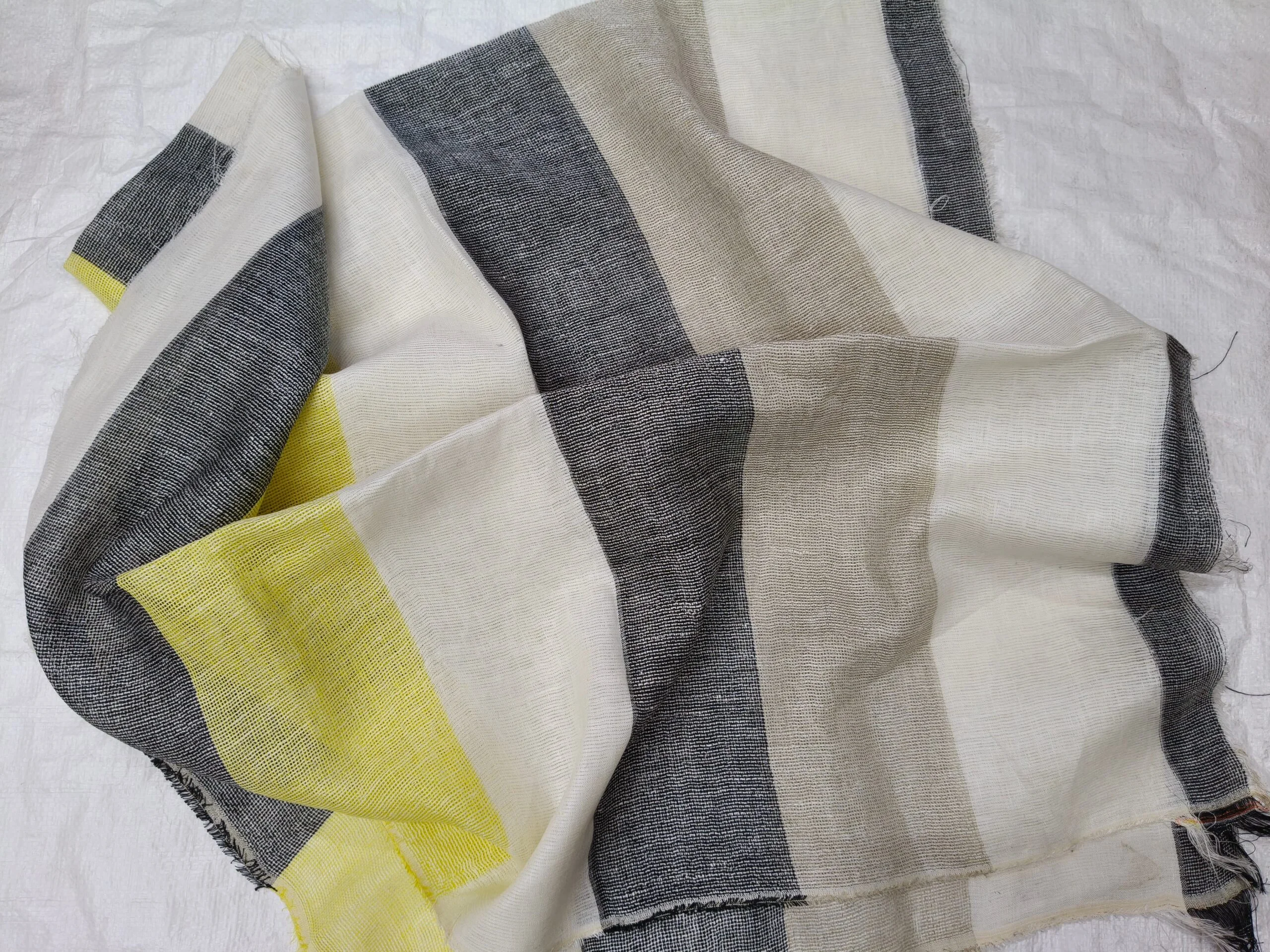
1. Mistake: Skipping Sample Approval Before Bulk Production
One of the most costly mistakes is confirming a bulk order based only on a photograph, catalogue image or verbal description. A photograph cannot reliably communicate fabric weight, hand feel, transparency, drape, surface texture or the way a fabric behaves when sewn and washed.
What can go wrong?
- The bulk fabric feels stiffer or softer than expected.
- GSM, width or construction differs from the buyer’s requirement.
- Colour shade does not match the approved design reference.
- Print placement, repeat or embroidery density is different.
- Shrinkage, colourfastness or seam behaviour creates problems during garment production.
How to avoid it
- Request a physical fabric sample representing the proposed construction and finish.
- Approve a lab dip or shade swatch for dyed fabric where applicable.
- Approve a print strike-off or embroidered sample for value-added fabric.
- Test relevant properties, including shrinkage and colourfastness, against the intended use.
- Keep a dated, identified approval sample and written specification for comparison with bulk goods.
2. Mistake: Not Defining Clear Fabric Specifications
Terms such as “premium linen”, “soft cotton”, “pure silk” or “lightweight fabric” can mean different things to different buyers and suppliers. If the technical details are not documented, both parties may believe they have agreed to different products.
| Specification | What to define | Why it matters |
|---|---|---|
| Fibre composition | Exact fibre names and percentages | Product identity, labelling and compliance |
| Construction | Woven or knitted, weave or construction details | Appearance, stretch and performance |
| GSM | Target weight and agreed tolerance | Material weight and garment suitability |
| Width | Finished usable width and measurement basis | Pattern planning and fabric consumption |
| Colour and design | Colour reference, print repeat and placement | Shade and design consistency |
| Finishing | Washing, softening, pre-shrinking or other treatment | Hand feel and dimensional stability |
| Performance | Shrinkage, colourfastness and other agreed tests | Fit, care and end-use performance |
Write these details into a technical sheet, purchase order or approved product specification. Include tolerances and test methods rather than relying on broad descriptions.
For more detail, see our fabric GSM guide for international buyers.
3. Mistake: Not Verifying the Supplier’s Actual Capability
A supplier’s website or catalogue may show a wide range of fabrics, but that does not automatically mean every item is manufactured in-house or available at the requested quantity and lead time. A business may be a manufacturer, weaving unit, processor, merchant exporter or order supplier coordinating production partners.
What buyers should verify
- Registered business identity and contact details.
- The supplier’s role in the production and supply chain.
- Actual capability for the required fibre, construction, finish and quantity.
- Sample process, inspection arrangements and quality records.
- Export experience and ability to prepare the required shipment documents.
- References or facility evidence where appropriate.
- Whether any certificate is valid, relevant and within the supplier’s scope.
Ask direct, specific questions. For example: “Is this fabric woven at your own facility or through a production partner?” and “Who checks GSM and usable width before dispatch?” Clear answers help you understand the supply arrangement.
4. Mistake: Ignoring Destination-Market Compliance Requirements
A fabric that can be exported from India is not automatically compliant for every destination market or end use. Requirements can depend on fibre composition, chemical substances, product type, labelling, customs classification and the intended application.
Areas international buyers may need to check
- Fibre identification and labelling: Confirm applicable rules for fibre names, percentages and required language.
- Chemical restrictions: Identify relevant restrictions for dyes, finishes and substances in textile articles. EU REACH requirements may be relevant for products placed on the EU market.
- Testing: Agree which colourfastness, dimensional stability or restricted-substance tests are needed for the product.
- Customs classification: Confirm the correct tariff code based on actual composition and construction.
- Origin and documents: Check country-of-origin marking, certificate-of-origin needs and import documentation.
- Claims and certification: Verify any organic, recycled, safety or sustainability certification before using the claim.
Buyers should confirm current requirements with their destination-country customs broker or compliance specialist. A supplier can provide product information and supporting documents, but the importer should not assume that a general assurance replaces its own compliance checks.
5. Mistake: Underestimating Sampling and Production Lead Time
Fabric production involves more than the time required to weave or process the material. Development, yarn or raw-material availability, lab dips, sample approval, dyeing, printing, embroidery, finishing, inspection and transport can all affect the schedule.
Build a realistic timeline around milestones
- Initial enquiry and technical clarification.
- Sample development and dispatch.
- Buyer review, testing and sample approval.
- Raw-material procurement and production planning.
- Weaving or knitting, followed by processing and finishing.
- Bulk inspection, packing and export preparation.
- International transit, customs clearance and final delivery.
Sampling and production durations vary by fabric, customisation, quantity, supplier capacity and season. Any timeline quoted by a supplier should be treated as a project estimate tied to defined milestones—not as a universal industry guarantee.
6. Mistake: Choosing a Supplier Only on the Lowest Price
A low quotation can look attractive, especially when comparing multiple suppliers. However, the cheapest offer may not represent the best total value if it uses a different composition, lower usable width, different GSM, less complete finishing or a different delivery term.
Compare quotations on a like-for-like basis
- Same fibre composition and construction.
- Same target GSM, tolerance and usable width.
- Same colour, print, embroidery and finishing requirements.
- Same order quantity, packing and inspection standard.
- Same Incoterm, named place and freight assumptions.
- Same payment schedule and expected delivery milestones.
Evaluate supplier communication, transparency, sample quality, quality-control process and export readiness alongside price. Calculate landed cost rather than comparing only the ex-factory or fabric rate.

7. Mistake: Misunderstanding Incoterms and Logistics Responsibilities
Terms such as EXW, FCA, FOB, CFR, CIF and DAP allocate specific delivery, cost and risk responsibilities. Confusion about them can lead to unexpected charges or disagreement over who arranges transport, export clearance, insurance or import clearance.
| Term | General point to understand | Buyer should clarify |
|---|---|---|
| EXW | Seller makes goods available at the named place. | Collection, loading, export clearance and transport arrangements; FCA may be more practical in some export transactions. |
| FCA | Seller delivers goods to the carrier or nominated party at the named place, with export clearance as specified by the rule. | Exact handover point and who arranges main carriage. |
| FOB | For sea or inland waterway transport; seller delivers goods on board the vessel at the named port. | Named port, shipment handover and risk-transfer point. |
| CFR | For sea or inland waterway transport; seller pays cost and freight to the named destination port, while risk transfers at shipment. | Who arranges insurance and destination charges. |
| CIF | For sea or inland waterway transport; seller pays cost, freight and required insurance to the named destination port, with risk transferring at shipment. | Insurance coverage, exclusions and destination handling. |
| DAP | Seller delivers at the named destination place ready for unloading; buyer handles import clearance and duties/taxes. | Import clearance, unloading and final delivery access. |
Specify the named place or port and the Incoterms® version, such as Incoterms® 2020. Incoterms do not by themselves determine ownership transfer or payment terms. Ask your freight forwarder or customs broker to explain the cost implications for your route.
8. Mistake: Relying on Informal or Incomplete Communication
International orders may involve different time zones, languages and business practices. Verbal discussions and scattered chat messages can create confusion when a project includes several colours, fabric qualities or delivery dates.
Build a simple communication system
- Use one written purchase specification and keep its revision number current.
- Confirm prices, quantities, approvals and deadlines in writing.
- Use clear product codes for each fabric, colour and design.
- Record sample approvals and changes with dates.
- Agree how often production updates will be shared.
- Escalate technical questions early rather than waiting until dispatch.
- Use video calls when a visual or technical discussion would be clearer.
After an important call, send a short written summary of decisions, open questions and next actions. This creates a shared record for both parties.
9. Mistake: Skipping Pre-Dispatch Quality Inspection
Approving a sample is important, but it does not guarantee that every bulk roll will match it. Buyers should agree how bulk production will be inspected and what happens if the goods do not meet the specification.
Useful fabric inspection points
- Fibre composition and product identification.
- GSM and agreed tolerance.
- Finished usable width and roll length.
- Shade consistency within and between rolls.
- Weaving or knitting defects, stains, holes and other visible faults.
- Print repeat, placement, colour and embroidery execution.
- Shrinkage, colourfastness and other specified test results.
- Roll packing, labels, quantities and shipping marks.
Agree an inspection method, sampling plan and acceptance criteria before production. For larger or higher-risk orders, consider an independent inspection company or laboratory. Keep inspection records and photographs linked to the relevant lot or roll numbers.
10. Mistake: Leaving Payment Terms and Bank Details Unclear
Payment misunderstandings can delay production or expose either party to unnecessary risk. A proforma invoice or sales contract should clearly state the currency, amount, payment milestones, bank charges, payment deadline and the conditions for starting production or releasing goods.
- Confirm the beneficiary’s legal name and bank details through a trusted channel.
- Document advance payment and balance-payment milestones.
- Clarify who bears intermediary and receiving-bank charges.
- Agree cancellation, delay, refund and claim procedures.
- Use suitable payment methods for the transaction size and risk.
- Independently verify any last-minute change to bank instructions.
11. Mistake: Making Sustainability Assumptions Without Evidence
Natural fibres, handloom production or a “green” product description do not automatically prove that a fabric meets a particular environmental or social standard. Buyers should request evidence that supports the specific claim they intend to make.
- Confirm fibre composition and origin where relevant.
- Ask what is known about dyeing, printing and finishing processes.
- Verify certification holder, scope, validity and product coverage.
- Request appropriate test reports where chemical or performance requirements apply.
- Distinguish a supplier’s general business certificate from product-specific certification.
- Avoid unsupported claims such as “100% sustainable”, “chemical-free” or “organic certified”.
Responsible sourcing is built on traceable information, appropriate verification and accurate claims—not on labels alone.
12. Mistake: Assuming Repeat Orders Will Match Automatically
Fabric can vary between production lots due to yarn availability, dye batches, processing conditions, finishing and raw-material differences. A repeat order may not be identical to the first delivery unless the buyer and supplier plan for continuity.
How to improve repeat-order consistency
- Keep the approved reference sample and technical specification.
- Record the original production details and colour references.
- Ask whether the same yarn, construction and finishing route can be repeated.
- Approve a new lab dip or sample when colour or material sources change.
- Define acceptable shade and GSM variation.
- Discuss forecast quantities and expected reorder dates with the supplier.
For a long-running collection, consider a fabric continuity plan that records the approved quality, supplier, production details and acceptable alternatives.
13. A Safer Step-by-Step Workflow for Sourcing Fabric from India
Step 1 · Define
Prepare the fabric brief: composition, GSM, width, construction, colour, finish, end use and quantity.
Step 2 · Verify
Check the supplier’s identity, role, capability, references and export process.
Step 3 · Sample
Request representative samples, lab dips or print and embroidery approvals as needed.
Step 4 · Test
Evaluate relevant performance properties and make a trial garment when appropriate.
Step 5 · Contract
Confirm price, MOQ, tolerances, lead time, payment milestones and Incoterm in writing.
Step 6 · Monitor
Track production milestones and communicate any changes promptly.
Step 7 · Inspect
Check bulk goods against the approved sample and agreed inspection criteria.
Step 8 · Dispatch
Confirm packing, documents, freight arrangements and destination import readiness.
14. International Buyer Checklist Before Confirming a Fabric Order
- Supplier identity and production role have been verified.
- Composition, construction, GSM, width and finish are documented.
- Physical sample and colour or design approvals are recorded.
- Testing requirements and quality tolerances are agreed.
- MOQ, price basis, quantity and production schedule are clear.
- Destination compliance and customs classification have been checked.
- Incoterm, named place, freight and insurance responsibilities are understood.
- Payment milestones and bank details have been independently confirmed.
- Inspection, claims and non-conformance procedures are written down.
- Shipping documents, packing and delivery requirements are agreed.
15. How Weaveify Approaches International Fabric Enquiries
Weaveify is an India-based textile business supplying fabrics for apparel applications. Its range includes linen, cotton and silk fabrics, as well as printed and embroidered options. Product specifications, availability, production arrangements, minimum quantities and lead times should be confirmed for each individual enquiry.
A clear buyer brief helps both sides start with aligned expectations. Share the required fibre composition, GSM, usable width, construction, colour, finish, quantity, end use and destination country. Where relevant, discuss sample approval, testing, inspection and shipment requirements before confirming bulk production.
Explore Weaveify fabric categories, learn about infrastructure, or contact Weaveify with your sourcing requirement.
16. Frequently Asked Questions About Sourcing Fabric from India
1. Is sourcing fabric from India risky?
Any international sourcing project has risks, but buyers can reduce them by verifying suppliers, defining specifications, approving samples, checking compliance and agreeing inspection and delivery terms in writing.
2. What is the most common mistake when buying fabric from India?
One common and avoidable mistake is placing a bulk order without approving a representative physical sample and documenting the exact fabric specification.
3. Should I always request a fabric sample?
For most new fabric qualities or suppliers, yes. A sample helps assess texture, weight, colour, opacity and construction. Custom prints and embroidery should also have their own approval samples.
4. What details should a fabric specification include?
Include fibre composition, construction, GSM and tolerance, usable width, colour, finish, end use, test requirements, quantity and packing or labelling details.
5. How can I verify an Indian textile supplier?
Check business identity, production role, product capability, export experience, sample quality, references and documents. Verify certificates with the issuing organisation and check their scope.
6. How long does fabric production in India take?
Timing varies with fabric type, raw-material availability, sampling, customisation, quantity, processing and supplier capacity. Request a milestone-based schedule for your specific order.
7. Why should I not choose only the lowest fabric price?
Quotations may differ in composition, GSM, width, finish, inspection, packing and delivery terms. Compare like-for-like specifications and calculate landed cost before deciding.
8. What are the most important Incoterms for fabric imports?
EXW, FCA, FOB, CFR, CIF and DAP are commonly encountered. Understand the named place, delivery point, cost allocation and risk transfer for the specific rule and transport mode.
9. Do I need to check REACH when importing fabric into Europe?
REACH restrictions may apply to substances in textile articles placed on the EU market. Identify the relevant requirements for the product and obtain suitable evidence or testing where needed.
10. Should bulk fabric be inspected before dispatch?
For many commercial orders, pre-dispatch inspection is a valuable risk-control step. Agree the inspection method, sampling plan and acceptance criteria before production.
11. How can I avoid colour differences between sample and bulk?
Approve a physical colour standard or lab dip, define shade tolerances, identify the approved reference and check bulk rolls under consistent evaluation conditions.
12. How can I reduce payment fraud risk?
Verify beneficiary details independently, document payment milestones and confirm any bank-detail change through a previously trusted contact channel.
13. Are natural fabrics automatically sustainable?
No. Environmental and social performance depends on farming, processing, dyeing, finishing, transport and other supply-chain factors. Verify specific claims with appropriate evidence.
14. Will a repeat fabric order match the first order?
Not necessarily. Raw materials, yarn, dye lots and finishing can vary. Keep reference samples and specifications, and agree acceptable variation and reapproval procedures.
15. How can Weaveify help with a fabric sourcing enquiry?
Weaveify can review enquiries for its apparel fabric range. Buyers should share composition, GSM, width, construction, finish, quantity and destination so product options and next steps can be discussed.
Planning to Source Fabric from India?
Start with a clear fabric brief. Share your composition, GSM, width, colour, finish, quantity and destination market with Weaveify to discuss suitable fabric options, samples and sourcing requirements.
Send Your Fabric Enquiry
Pingback: What Is Tussar Silk Fabric? Uses, Characteristics & Buyer Guide