
How to Start a Clothing Brand Using Indian Fabrics: A Step-by-Step Guide
Starting a clothing brand is not simply about creating attractive designs. You also need a clear customer, a focused product range, the right fabric, dependable production partners and a realistic plan for pricing, quality and fulfilment. Indian textiles can give a new label access to linen, cotton, silk, prints and embroidery—but the right sourcing decisions make the difference.
This guide takes you from brand concept to your first fabric order. It focuses on apparel fabrics and explains how to plan a collection, evaluate suppliers, manage minimum order quantities, check compliance and calculate the real cost of launching.
Brand strategyFabric selectionSampling & MOQProduction planning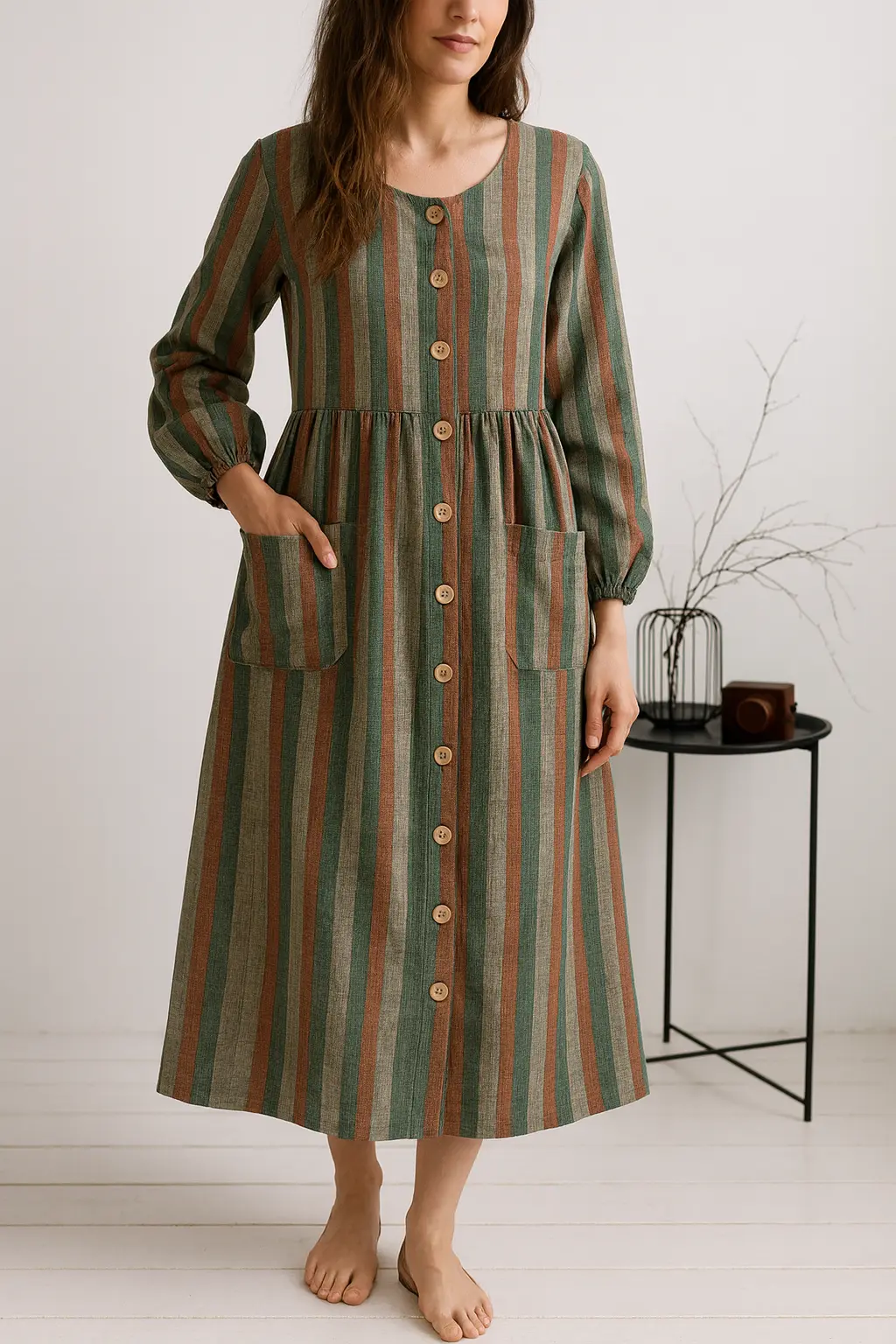
1. Why Consider Indian Fabrics for Your Clothing Brand?
India has a diverse textile ecosystem that includes traditional handloom clusters, powerloom production and specialised processing. This can give fashion businesses access to a wide variety of fibres, fabric weights, textures and decorative finishes.
Wide fabric selection
Explore linen, cotton, khadi cotton, silk and blended fabrics for different apparel categories and price points.
Design development
Develop colourways, digital prints, embroidery and fabric finishes around your collection concept.
Different sourcing scales
Some suppliers can discuss sampling and smaller development quantities as well as repeat bulk orders. Confirm each product's MOQ.
Distinctive textile character
Regional weaving traditions and silk varieties can help brands create collections with a recognisable material story.
However, sourcing from India is not automatically cheaper or simpler for every business. Compare quality, consistency, minimum quantities, lead time, freight, import costs and communication before selecting a supplier.
2. Define Your Brand Identity Before Choosing Fabric
Your brand identity should guide every product decision. A focused brand is easier to explain, market and manage than a catalogue that tries to serve every customer at once.
Answer these core questions
- Who is your customer? Define age range, lifestyle, location, purchasing habits and the problem your clothing solves.
- What will you sell? Choose a clear category such as women's everyday wear, premium shirts, occasionwear, resortwear, modest fashion or contemporary ethnic clothing.
- What is your position? Decide whether your brand is accessible, mid-market, premium or luxury—and make sure product quality supports that position.
- What makes you different? This could be fabric choice, fit, design language, craftsmanship, limited collections or a specific customer experience.
- Where will you sell? Consider your own website, marketplaces, boutiques, wholesale, pop-ups or a combination.
- What can you afford to launch? Set a realistic budget for development, inventory, packaging, marketing, shipping, returns and working capital.
3. Choose the Right Indian Fabrics for Your Collection
Choose fabric according to the garment's purpose, season, fit, drape, care requirements and selling price. Do not select a material only because it looks beautiful in a photograph. Request a physical sample and test it in the intended garment.
Linen fabrics
Suitable to consider for shirts, dresses, trousers, co-ordinated sets and warm-weather collections. Confirm fibre content, GSM, width, weave, opacity, shrinkage and natural slub variation.
Cotton fabrics
A versatile option for everyday clothing, shirts, dresses and casualwear. Assess composition, yarn and weave, hand-feel, shrinkage, colourfastness and finishing.
Silk fabrics
Tussar, Muga, Ghicha, Chanderi, Organza and Raw Silk offer different textures and drapes for premium apparel, occasionwear and statement pieces. Verify the exact composition and construction.
Digital printed fabrics
Useful for developing signature patterns and seasonal designs. Confirm artwork file, repeat size, colour references, print placement and production tolerances.
Embroidered fabrics
Can add texture and detail to occasionwear and premium collections. Specify motif size, stitch density, backing, placement and acceptable variation.
Khadi and textured cotton
Can create a distinctive surface and textile character. Review natural irregularities, width, hand-feel and suitability for your garment pattern.
Explore the Weaveify apparel fabric range, including Tussar Silk, Muga Silk, Ghicha Silk, Chanderi Silk, Organza Silk and Raw Silk.

4. Build a Small, Commercially Focused First Collection
Your first collection should test a clear idea and help you learn what customers actually buy. Too many styles, colours and fabric types can tie up cash in slow-moving stock.
A practical collection-planning method
- Choose a hero product: Identify one garment that expresses your brand and is easy for your target customer to understand.
- Add complementary styles: Build a small group of products that work together in colour, fabric and styling.
- Limit fabric variations: Use a controlled number of base fabrics and colourways to simplify sourcing and production.
- Plan sizes and fit: Create a size chart and fit sample before bulk manufacturing.
- Calculate fabric consumption: Ask your pattern maker or garment manufacturer to estimate consumption per size, including cutting allowance and expected wastage.
- Test before scaling: Use samples, customer feedback, pre-orders or a limited launch to assess demand.
5. Develop Your Designs and Technical Specifications
Once the collection direction is clear, turn each design into instructions that a pattern maker, garment manufacturer and fabric supplier can follow.
Your product development pack may include
- Fashion illustration or reference photograph that you have the right to use
- Technical flat sketches, front and back
- Measurements, size chart and fit requirements
- Fabric composition, GSM, usable width and colour
- Construction details, seams, trims, buttons, zips and lining
- Print artwork, repeat dimensions and placement map
- Embroidery artwork, stitch details and placement
- Label, care label, packaging and branding requirements
- Sample comments, revision history and approval date
For printed or embroidered fabrics, approve a production-representative strike-off or sample before bulk processing. Screen colours and digital mock-ups may differ from the finished textile.
6. Understand Fabric MOQ, Sampling and Production Lead Times
MOQ means minimum order quantity. Fabric MOQ and garment MOQ are not necessarily the same: your fabric supplier may sell by the metre, while your garment factory may set a minimum number of pieces per style, colour or size run.
| Stage | Indicative planning guide | What to confirm |
|---|---|---|
| Fabric samples | Swatches or small sample lengths | Availability, sample charges and courier cost |
| Fabric bulk MOQ | Often around 50–100 metres per design for some developments | Exact quantity by fabric, colour, finish and supplier |
| Sample preparation | Approximately 5–10 days where feasible | Material availability and sample process |
| Standard fabric production | Approximately 20–30 days | Capacity, raw material and approved specification |
| Custom fabric production | Approximately 30–45 days may be needed | Printing, embroidery, dyeing and finishing complexity |
| Garment sampling and production | Separate schedule from fabric supply | Pattern development, fit approvals, factory capacity and size range |
These are indicative fabric-planning ranges, not guaranteed commitments. Garment development and manufacturing add their own timelines. Obtain a combined schedule from all production partners before announcing a launch date.
7. Find and Evaluate the Right Fabric and Garment Partners
Starting a clothing brand usually involves more than one supplier. A fabric supplier provides the material; a pattern maker or garment manufacturer may develop and sew the clothing; printers, embroiderers, label makers and fulfilment providers may also be involved.
Fabric supplier
Evaluate fibre composition, construction, quality consistency, MOQ, sample service, production capacity and export experience.
Pattern maker / sample room
Check technical understanding, pattern accuracy, fit development, grading and ability to work to your measurement specifications.
Garment manufacturer
Review stitching quality, machinery, size-run capability, production capacity, quality checks, minimums and delivery planning.
Specialist processors
For printing, embroidery, dyeing or finishing, check artwork handling, colour control, process capability and testing.
Supplier due-diligence checklist
- Verify the legal business identity, address and contact details.
- Ask whether the supplier manufactures directly or coordinates partner units.
- Request physical samples and compare them with the written specification.
- Ask for relevant quality documents and test reports where applicable.
- Agree inspection standards, defect tolerances and claims procedure.
- Confirm MOQ, price basis, lead time, payment terms and packaging in writing.
- For export orders, clarify who prepares each document and who books freight.
For fabric sourcing, read about Weaveify, review its infrastructure information and use the business enquiry page to discuss your fabric brief. You can also review our guide on evaluating an Indian fabric supplier from the blog resources.
8. Calculate Your Real Product Cost and Retail Price
A clothing brand can make sales and still lose money if it prices products using fabric cost alone. Build a cost sheet for every style and include all direct and indirect costs that affect the final unit.
| Cost category | Examples to include |
|---|---|
| Fabric and trims | Fabric consumption, lining, buttons, zips, thread, labels and other components |
| Development | Patterns, prototypes, fit samples, grading and sample courier |
| Garment production | Cutting, stitching, finishing, pressing and quality inspection |
| Import and logistics | Freight, insurance, customs duty, import taxes, clearance and inland delivery |
| Packaging | Garment bags, boxes, tags, inserts and shipping materials |
| Sales and marketing | Photography, advertising, marketplace fees, payment fees and commissions |
| After-sales | Returns, exchanges, defects, customer support and unsold inventory allowance |
Calculate the cost per saleable garment, not just the cost per garment produced. Then set a retail or wholesale price that accounts for your target gross margin, channel costs, taxes and promotional strategy.
Simple pricing formula
For a target gross margin, a basic starting formula is:
For example, if the unit cost is 40 currency units and the target gross margin is 60%, the indicated selling price is 100 currency units. This is a planning example, not a recommended market price.
Also prepare a cash-flow plan. Deposits to suppliers, production balances, freight and marketing costs may be due before customer revenue arrives.
9. Compliance, Fibre Labelling and Product Safety
Compliance depends on where you sell, what the garment is made from, who will wear it and how it is marketed. Check requirements for each destination market before ordering labels or launching products.
Start with accurate product information
- Obtain reliable fibre-composition details from the fabric supplier.
- Confirm the country-of-origin rules for the finished garment; fabric origin and garment origin are not automatically identical.
- Check textile fibre labelling, care instructions and responsible-business identification requirements in each sales market.
- For children's products, identify additional chemical, flammability, testing and certification requirements that may apply.
- Keep test reports and supplier declarations linked to the exact material, colour, finish and production lot they cover.
Examples of market-specific rules to investigate
European Union
Review EU textile fibre-name and composition labelling rules, REACH restrictions and applicable product-safety obligations. Requirements depend on the product and market placement.
United States
Review FTC fibre-content, country-of-origin and care-labelling rules. Children's products may trigger additional CPSC requirements.
United Kingdom
Check applicable textile labelling, UK REACH and product-safety requirements, and distinguish Great Britain from Northern Ireland where relevant.
Other destinations
Check local customs, labelling, consumer-protection, chemical and product-safety rules with an importer or qualified adviser.
Do not assume that terms such as “organic”, “sustainable”, “AZO-free” or “certified” can be used without evidence. Verify the certificate, test method, product scope and validity before making a claim.
Useful references: US International Trade Administration: Textiles and apparel, ECHA: Understanding REACH and UK textile labelling guidance.
10. Plan Shipping, Inventory and Fulfilment
Decide where your fabric and garments will be produced, where finished stock will be stored and how customers will receive orders. Your supply chain may involve separate shipments for fabric, trims and finished clothing.
Air freight and courier
Often useful for samples, urgent replenishment and smaller consignments. It is generally faster but more expensive per kilogram. Confirm service availability and destination charges.
Sea freight
Often considered for larger shipments where the schedule allows. Compare LCL and FCL, port charges, customs clearance and inland delivery.
Local fulfilment
Storing stock near your customers may improve delivery speed and returns handling, but adds warehousing, inventory and fulfilment costs.
Direct fulfilment
Shipping each order from a production country can reduce local inventory needs but may increase delivery times, per-order shipping costs and returns complexity.
Agree the delivery term using the relevant Incoterms® rule, named place or port and edition. Clarify who handles export clearance, freight, insurance, import clearance, duties and final delivery. Transit times are estimates and vary by route, carrier, customs and destination.
11. Choose Your Sales Channels and Build a Launch Plan
Your sales channel affects product presentation, packaging, margins, customer service and stock planning. Start with one or two channels you can operate consistently.
- Your own website: Gives you control over brand storytelling, customer data and the shopping experience, but requires traffic generation and trust-building.
- Marketplaces: Can provide customer reach, but involve platform rules, fees, competition and operational requirements.
- Social commerce: Useful for storytelling, product demonstrations, creator partnerships and building a community.
- Boutiques and wholesale: Can create repeat business, but buyers may expect wholesale pricing, consistent replenishment and clear delivery terms.
- Pop-ups and events: Allow customers to experience fabric, fit and quality in person, while giving you direct feedback.
Before launch, prepare
- Brand name, visual identity and a clear product promise.
- Product photography and accurate descriptions.
- Size guide, garment measurements and care information.
- Transparent pricing, shipping, returns and customer-service policies.
- Inventory records and a process for handling orders and exchanges.
- A launch content plan with product stories, fabric details and customer education.
12. Where Can You Position Your Clothing Brand?
Different markets have different customer expectations, climate needs, price points and compliance requirements. Use market research to validate demand before selecting a country or region.
Europe
Explore customer segments for linen, cotton, premium textiles and design-led apparel. Research fibre labelling, chemical restrictions and local consumer expectations.
United States
Assess opportunities across casualwear, designer clothing and niche labels. Plan for federal and state requirements, logistics and channel economics.
Australia
Consider warm-weather apparel and lightweight fabrics where the product and season fit the customer. Validate demand and shipping economics.
Middle East
Research premium apparel, modest fashion and occasionwear segments. Product positioning, climate, local preferences and import rules vary by country.
Do not treat these regional observations as guaranteed demand. Interview potential customers, compare competitor products and prices, test a small collection and track actual conversion and repeat purchases.
13. A Practical 90-Day Clothing Brand Launch Roadmap
The schedule below is a planning framework for a small launch. Actual timing depends on design complexity, sample revisions, supplier capacity, compliance checks and shipping.
| Period | Priority | Key deliverables |
|---|---|---|
| Days 1–15 | Research and positioning | Target customer, competitor review, brand concept, initial product category and budget |
| Days 16–30 | Collection and fabric brief | Initial designs, technical details, fabric shortlist and supplier enquiries |
| Days 31–45 | Sampling and costing | Fabric swatches, garment prototypes, fit feedback, preliminary cost sheet |
| Days 46–60 | Approval and production planning | Final specifications, supplier terms, compliance review, order and cash-flow plan |
| Days 61–75 | Production and brand preparation | Production monitoring, packaging, product photography, website and launch content |
| Days 76–90 | Quality and launch readiness | Inspection, fulfilment plan, inventory setup, final pricing and launch campaign |
14. Common Mistakes New Clothing Brands Should Avoid
- Ordering too many styles: A broad first collection can create excess inventory and operational complexity.
- Choosing fabric from photographs: Always assess physical samples and test them in the intended garment.
- Ignoring garment development: Fabric sourcing is only one part of making clothing; fit, pattern, stitching and finishing also matter.
- Underestimating total cost: Include sampling, wastage, freight, duties, packaging, marketing, returns and payment fees.
- Skipping written specifications: Verbal instructions make it difficult to resolve differences between approved and delivered goods.
- Assuming all suppliers have the same MOQ: MOQ varies by fabric, colour, customisation and garment production partner.
- Making unsupported claims: Do not advertise a product as organic, certified or sustainable without suitable evidence.
- Ignoring cash flow: Keep enough working capital for deposits, production balances, logistics and marketing before sales revenue arrives.
- Scaling before validating demand: Use a small launch and customer feedback to guide the next production decision.
15. Frequently Asked Questions
Can I start a clothing brand using Indian fabrics with a small budget?
It may be possible to start with a focused capsule collection, limited fabric choices and careful sampling. Your actual budget depends on garment complexity, fabric MOQ, production costs, marketing, shipping and the sales channel. Prepare a cash-flow plan before ordering.
Which Indian fabrics are best for a new clothing brand?
There is no single best fabric. Linen may suit certain warm-weather styles, cotton is versatile, silk can support premium or occasionwear collections, and digital prints or embroidery can create distinctive designs. Choose based on customer, garment, quality and price point.
What is the minimum fabric order quantity in India?
MOQ depends on the fabric, construction, colour and processing. Some developments may start around 50–100 metres per design, but this is not universal. Ask the supplier for a written, product-specific MOQ.
Can I buy fabric samples before placing a bulk order?
Yes. Ask for swatches or sample lengths and confirm sample charges and courier costs. For custom prints, dyeing or embroidery, request a sample that represents the intended production process.
Is fabric MOQ the same as garment MOQ?
No. Fabric MOQ is generally measured by length or weight, while garment MOQ is often measured by pieces per style, colour or size run. Confirm both with the relevant suppliers.
Does Weaveify manufacture finished clothing?
Weaveify's business focus described here is apparel fabrics: manufacturing, order supply and export of fabrics. Buyers should separately arrange pattern development and garment stitching with a suitable apparel manufacturer unless a specific garment-production service is confirmed in writing.
Can I create my own digital print designs?
Yes, custom artwork can be discussed with a capable printing supplier. Confirm file format, repeat dimensions, colour references, print placement, sampling, usage rights and production tolerances before ordering.
Can I use embroidery on my clothing collection?
Embroidery can be developed on suitable base fabrics. Confirm motif size, stitch density, backing, placement, production time, cost and wash-care implications. Approve a sample before bulk processing.
How long does it take to receive fabric from India?
Timing depends on sampling, production, export handling, freight route, customs and final delivery. Obtain separate estimates for production and transit rather than relying on one general delivery figure.
How do I calculate the fabric needed for each garment?
Ask your pattern maker or garment manufacturer to calculate consumption using the pattern, size range, usable fabric width, print repeat, matching requirements and cutting allowance. Include expected wastage when costing the order.
How do I calculate the selling price of my clothing?
Include fabric, trims, development, garment manufacturing, packaging, freight, duties, marketing, marketplace or payment fees, returns and overhead. Then set a price based on your target gross margin and market positioning.
Do I need certifications to sell clothing internationally?
Requirements depend on the product and destination. Some markets require fibre labelling and product-safety compliance; certain categories, such as children's products, may have additional rules. Voluntary certifications may be requested by buyers but should not be confused with legal requirements.
Can a small brand sell internationally?
Yes, but international selling requires planning for customs, duties, taxes, product labelling, shipping, returns, payment processing and customer service. Validate the market and check the applicable rules before accepting orders.
Should I launch on my own website or a marketplace?
Both can work. A website offers more control over brand experience but requires traffic generation. Marketplaces provide access to shoppers but involve fees, competition and platform rules. Choose channels that match your budget and operational capacity.
How can I avoid fabric quality problems?
Use a written specification, approve a physical reference swatch, agree tolerances and inspection criteria, and check bulk fabric before dispatch. Keep records of sample approvals and any corrective actions.
16. Start Your Fabric Sourcing Journey with Weaveify
Weaveify is an India-based textile business in Bhagalpur, Bihar, working as a fabric manufacturer, order supplier and exporter. Its apparel fabric range includes linen, cotton, silk, digital printed and embroidered fabrics.
Weaveify holds ISO 9001:2015 certification. For each enquiry, buyers should confirm the exact fibre composition, GSM, width, construction, MOQ, sample availability, production schedule, test evidence and commercial terms.
Fabric categories to explore
- Linen fabrics for selected shirts, dresses, trousers and co-ordinated apparel
- Cotton fabrics for versatile everyday clothing
- Silk fabrics for premium and occasionwear concepts
- Digital printed fabrics for custom pattern development
- Embroidered fabrics for detailed apparel designs
Explore all fabric categories, review infrastructure information or learn more on the About Us page.
Planning a new clothing brand?
Share your brand concept, target garment, preferred fabric, composition, GSM, width, colour, finish and estimated quantity. If you have a mood board, reference swatch or design, include it with your enquiry. Weaveify can review your fabric requirements and discuss suitable fabric options, sample availability, MOQ and a realistic supply schedule.
Discuss your fabric requirements Explore fabric categoriesFabric supply and garment manufacturing are separate activities. Confirm the scope of each supplier's services, all costs and timelines in writing.
This guide is general business information, not financial, legal or regulatory advice. Product costs, MOQ, lead times and compliance requirements vary by supplier, garment and destination market. Verify details before placing an order.