
What Is Raw Silk Fabric? Uses, Characteristics and Apparel Buyer Guide
Raw silk is valued for its natural character, subtle lustre and distinctive textile feel. It can bring depth and structure to apparel, but the term “raw silk” is used differently in textile trade. Understanding the fibre, yarn, fabric construction and finishing is essential before choosing it for a collection.
This guide explains what raw silk means, how it differs from spun silk and other silk fabrics, its characteristics and apparel uses, how to assess GSM and quality, and what buyers should confirm when sourcing raw silk fabric from India.
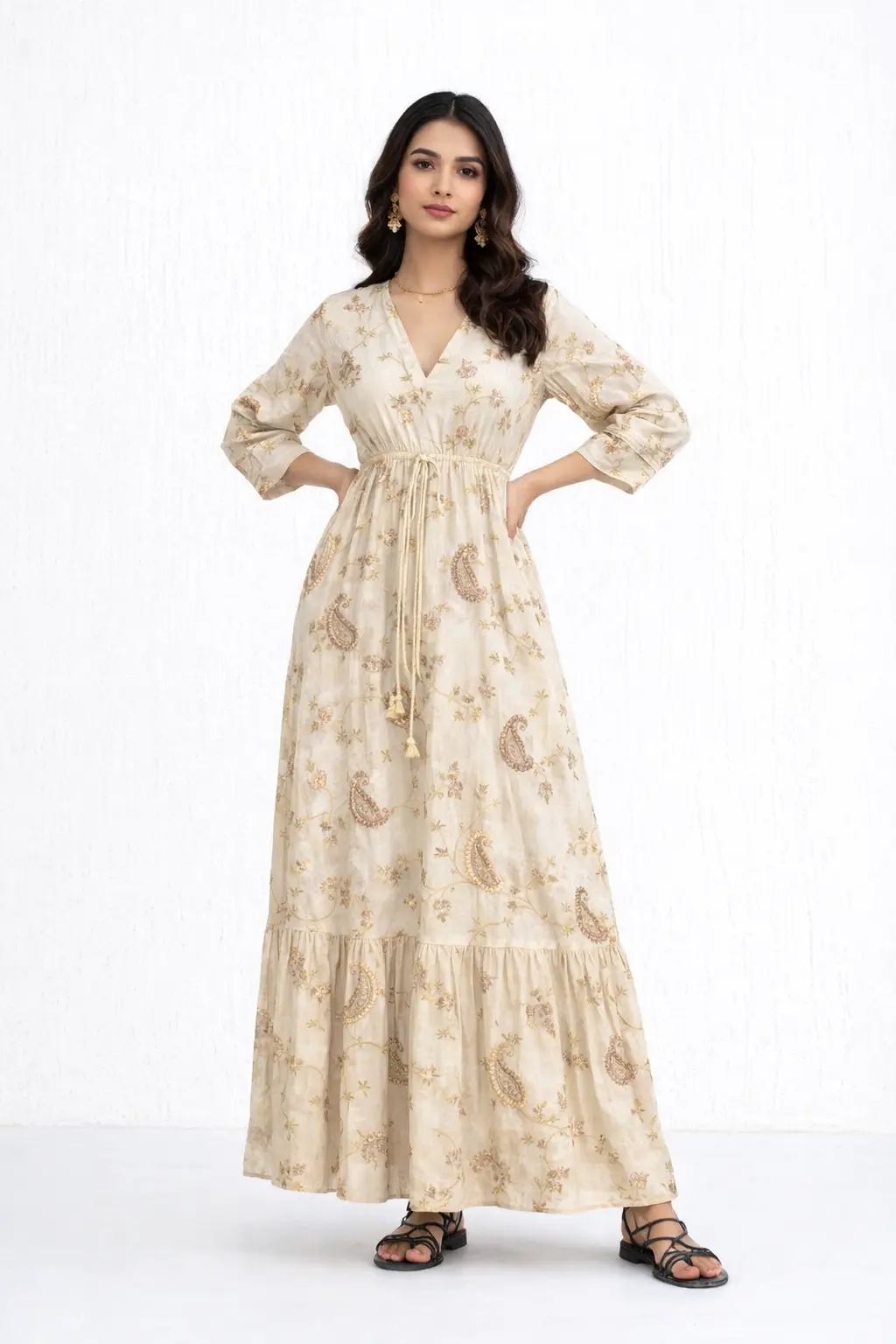
1. What Is Raw Silk Fabric?
In traditional silk processing, raw silk commonly refers to reeled silk filament yarn before the sericin—the natural gum coating around the silk filaments—has been removed through degumming. The yarn is produced by reeling continuous filaments from suitable silkworm cocoons. The resulting yarn is then prepared and woven or knitted into fabric.
In retail and fabric trade, however, “raw silk” is also used as a broader commercial name for textured silk fabrics with a natural, slightly irregular or matte appearance. These fabrics can differ in yarn type, fibre content, weave and finishing. Some textured silk fabrics may be made with spun silk yarns or blends rather than reeled filament yarn alone.
For apparel sourcing, the most reliable approach is to request the fibre composition, yarn description, weave, finished weight, width and a physical swatch. The trade name alone is not a complete technical specification.
2. Raw Silk, Spun Silk and Silk Noil: Understanding the Difference
These terms are sometimes used loosely in the market, but they do not necessarily describe the same material.
Raw silk yarn
Generally refers to reeled filament silk yarn that still contains sericin before degumming. The yarn may be processed further before weaving or other textile use.
Spun silk
Made by spinning shorter silk fibres into yarn. It often has a different surface and yarn character from continuous reeled filament silk.
Silk noil
Refers to short silk fibres separated during processing and the yarn or fabric made from them. Noil fabrics are often textured and may have a more matte, irregular appearance.
Commercial “raw silk” fabric
A trade description that may refer to a textured silk fabric or a particular construction. Its exact meaning should be confirmed with the supplier rather than assumed.
When buying for a branded collection, put the exact fibre and yarn description on the purchase order. If the fabric is a blend, specify every fibre and percentage.

3. Key Characteristics of Raw Silk Fabric
Textured surface
Many fabrics sold as raw silk have visible yarn irregularities or a gently uneven surface. The degree of texture depends on the yarn and construction. Buyers should approve the expected surface character rather than treating every irregularity as either a defect or a desirable feature.
Subtle or matte appearance
Some raw silk constructions have a lower sheen than highly lustrous silk fabrics. However, the finish can vary: raw silk is not always completely matte. Assess the actual sample under the lighting in which the garment will be viewed.
Distinctive hand feel
Raw silk may feel crisp, dry, textured or softly structured depending on yarn, weave and finishing. It should not be described as uniformly rough; the hand feel is construction-specific.
Body and shape
Some raw silk fabrics provide enough body for tailored silhouettes, jackets, skirts and structured dresses. Others are lighter and more fluid. Drape must be assessed on the actual fabric rather than inferred from the name.
Natural fibre identity
Silk is a protein fibre. If natural fibre content is important to a brand's claims, verify the actual composition and any blends. A natural fibre does not automatically make a finished textile environmentally sustainable; farming, processing, dyeing, finishing, transport and product life all matter.
Care requirements
Care depends on the fabric construction, dyeing and finish. Some silk garments require specialist cleaning, while other products may tolerate carefully controlled washing. Confirm care through testing on the finished fabric or garment.
4. Types and Constructions Sold as Raw Silk
Raw silk is not one universal weave or weight. Buyers may encounter different constructions and commercial descriptions, including the following:
- Plain-woven textured silk: A simple weave with a visible yarn character, suitable for a range of apparel styles depending on weight and drape.
- Spun silk fabric: Made with yarn spun from shorter silk fibres, often creating a more textured surface than continuous-filament silk.
- Silk noil fabric: Uses noil yarn and typically has a distinctive irregular, matte texture.
- Silk blends: Silk may be blended with cotton, linen, viscose or other fibres. The exact blend changes cost, performance and care.
- Textured or slub-effect silk: The surface may show intentional yarn variation. Confirm whether the effect is inherent to the yarn or created through a design or finishing process.
- Dyed, printed or embroidered raw silk: Suitable base fabrics may be developed with colour, digital printing or embroidery. Process compatibility should be tested on the selected construction.
Ask the supplier for a clear description and sample of the exact construction. Similar commercial names can refer to different fabrics across suppliers and markets.
5. Uses of Raw Silk Fabric in Apparel
Jackets and tailored pieces
Fabrics with sufficient body can be considered for jackets, waistcoats and tailored separates. Test seam stability, lining compatibility and crease behaviour.
Dresses and skirts
Textured silk can add visual depth to occasion dresses, structured dresses and skirts. Select the weight and drape to match the silhouette.
Blouses and tops
Appropriate lightweight or medium-weight constructions can be used for premium tops and blouses, with attention to opacity and comfort.
Traditional and fusion wear
Raw silk fabrics can be used for selected ethnic garments, jackets, festive apparel and fusion designs.
Designer and occasion wear
Distinctive surface character can suit limited collections and occasion pieces where the material itself is an important design feature.
Coordinated collections
Raw silk may be paired with organza, cotton or other fabrics in a collection, provided colour, care and construction differences are considered.
Raw silk is not automatically suitable for every structured garment. Pattern, interfacing, lining, fabric weight and sewing method all influence the final result.
6. Raw Silk GSM, Width and Fabric Construction
GSM means grams per square metre. It is a measure of fabric mass per unit area, not a direct measure of quality. Two fabrics with the same GSM can have different thickness, opacity, texture and drape because their yarns, weave and finishing differ.
There is no universal GSM range for raw silk. The right weight depends on the intended garment and the exact fabric construction. A very light fabric may suit a blouse or overlay, while a heavier construction may be considered for a jacket or skirt. Always request the finished GSM and assess a physical sample.
| Apparel direction | What to evaluate | Why it matters |
|---|---|---|
| Lightweight blouse or top | GSM, softness, opacity, drape and seam strength | Comfort, coverage and sewing performance |
| Dress or skirt | Body, fall, lining need and crease behaviour | Finished silhouette and wearability |
| Jacket or tailored garment | Stability, thickness, interfacing compatibility and seam performance | Shape retention and construction quality |
| Layered or occasion garment | Surface, weight, transparency and coordination with other fabrics | Visual effect and ease of assembly |
Details to specify before ordering
- Exact fibre composition and yarn description.
- Weave or construction type.
- Finished GSM and acceptable tolerance.
- Finished usable width and selvedge requirements.
- Colour, shade reference and finishing treatment.
- Surface character, texture and approved reference swatch.
- Inspection method and defect acceptance criteria.
Confirm whether the GSM and width are measured before or after dyeing and finishing. Processing can affect both values.
7. Raw Silk Compared with Other Silk Fabrics
The descriptions below are broad buying guides. Actual properties depend on the specific yarn, weave, weight and finishing.
| Fabric | Common surface character | Possible apparel direction | Buyer consideration |
|---|---|---|---|
| Raw silk (trade description) | Often textured, natural-looking; finish varies | Tailored pieces, dresses, occasion wear | Clarify yarn and fibre specification |
| Silk organza | Sheer, crisp and structured | Overlays, sleeves, panels and couture details | Transparency, stiffness and composition |
| Tussar silk | Textured with characteristic natural sheen | Dresses, jackets, blouses and ethnic apparel | Yarn character and consistency |
| Muga silk | Distinctive golden appearance | Premium traditional and designer garments | Authenticity and origin verification |
| Ghicha silk | Textured, irregular yarn character | Relaxed premium and ethnic-inspired apparel | Exact trade description and blend |
| Chanderi | Lightweight, fine and often subtly lustrous | Kurtas, dresses, tunics and dupattas | Silk/cotton ratio and construction |
Explore Weaveify's silk fabric collection to compare different silk varieties.
8. How to Choose the Right Raw Silk for Your Apparel Collection
- Start with the garment: Define the silhouette, end use, season, target customer and retail positioning.
- Decide the surface: Choose the required texture, lustre, matte appearance and degree of yarn irregularity.
- Confirm fibre and yarn: Specify whether you need reeled filament silk, spun silk, noil silk or a blend, where relevant and verifiable.
- Select construction and weight: Agree weave, GSM, width, drape and opacity based on the garment pattern.
- Consider finishing: Confirm dyeing, washing, softening, printing or embroidery requirements.
- Request a representative sample: Check the material in the intended garment or a realistic sewing trial.
- Approve a written standard: Keep the approved swatch, composition, measurements, shade and tolerance records for bulk production.
9. Raw Silk Fabric Quality Inspection and Testing
Quality inspection should distinguish intentional natural texture from faults that affect performance or appearance. Agree the acceptable level of irregularity before production, particularly where the fabric's appeal depends on a textured surface.
Visual and physical checks
- Fibre identity: Confirm the declared composition and arrange fibre testing if the claim is commercially important.
- Yarn and weave: Look for broken ends, missing picks, holes, uneven density and unintended streaks.
- Surface character: Compare texture, slubs and irregularities with the approved sample.
- Shade consistency: Check roll-to-roll and lot-to-lot variation under consistent lighting.
- GSM and width: Measure finished fabric against agreed targets and tolerances.
- Strength and seam performance: Consider tensile, tear or seam-related tests where relevant to the garment.
- Dimensional stability: Test shrinkage or distortion using the intended care or processing method.
- Colour fastness: Specify relevant rubbing, washing or perspiration tests according to end use.
- Roll condition: Inspect for stains, moisture damage, creases, packing marks and incorrect roll identification.
Not every test is necessary for every product. Agree the test method, laboratory, sample conditioning and acceptance limit before placing the bulk order.
10. Working with Raw Silk in Garment Manufacturing
Raw silk and other textured silk fabrics can behave differently from smooth cotton or synthetic materials. A small pre-production trial helps the garment team confirm cutting, sewing, pressing and finishing methods.
Cutting and preparation
- Inspect the fabric before spreading and identify shade or texture variations that need to be managed in marker planning.
- Allow fabric to relax or condition according to the supplier's and factory's recommendations.
- Check whether the fabric has a directional surface, sheen or motif that requires one-way cutting.
- Use the actual usable width when calculating marker efficiency and fabric consumption.
- Plan for natural surface variation and agree how visible panels should be matched.
Sewing and finishing
- Test needle type, thread, stitch length and seam construction on the actual fabric.
- Check whether the fabric frays and choose an appropriate seam finish.
- Test lining and interfacing compatibility, especially for jackets and structured garments.
- Use a pressing test to establish suitable temperature, pressure and protective cloth requirements.
- Inspect finished garments for puckering, pulls, seam slippage, shine marks and other handling damage.
11. Sourcing Raw Silk Fabric from India
India has a long-established silk textile ecosystem with different regional weaving traditions and fabric specialities. Bhagalpur in Bihar is known for silk weaving and textured silk fabrics. Buyers should qualify suppliers according to the precise material and process they need, rather than assuming every silk supplier offers the same yarn, weave or finishing capability.
Step 1: Prepare a sourcing brief
Include the fabric's trade name, exact composition, yarn description if known, weave, GSM, width, colour, finish, intended garment, quantity and destination country. Attach a swatch or reference image where possible.
Step 2: Check supplier capability
Ask whether the supplier manufactures, sources or coordinates the fabric. Clarify which activities—yarn procurement, weaving, dyeing, printing, embroidery, finishing and inspection—are performed directly or through production partners.
Step 3: Evaluate samples
Request a sample from the same or closest possible construction to the proposed order. Check the surface, hand feel, drape, width, GSM and sewing performance.
Step 4: Confirm commercial terms
Agree MOQ, sample charges, price unit, payment schedule, production lead time, quality tolerance, packing and inspection arrangements in writing.
Step 5: Confirm export arrangements
Agree the applicable Incoterms rule and named place, freight and insurance responsibilities, customs documentation, country-of-origin requirements and destination-market obligations. Confirm the correct HS classification for the exact fabric with a qualified customs or trade professional.
Explore Weaveify raw silk fabric and learn more about the company's textile infrastructure.
12. Raw Silk Fabric Pricing, MOQ and Order Planning
Raw silk prices can vary considerably because the term covers different yarns and fabric constructions. Fibre identity, yarn quality, weave, weight, width, finishing, order quantity and market availability all influence the quotation.
Factors that affect cost
- Fibre composition, silk type and yarn preparation.
- Yarn quality, source and weaving complexity.
- Construction, GSM, usable width and fabric yield.
- Dyeing, printing, embroidery and finishing treatments.
- Order quantity, number of colours and custom development.
- Testing, inspection, packing and documentation requirements.
- Freight, insurance and delivery terms.
MOQ and lead time are supplier- and project-specific. Custom colours, special constructions or additional finishing may require different minimums and longer development. Request a written quotation that clearly separates sample charges, fabric price and logistics.
13. Raw Silk Care, Compliance and Export Documentation
Care instructions depend on the fibre, yarn, weave, dyeing and finish. Some silk garments may require specialist cleaning; others may tolerate a carefully controlled wash. Test the actual fabric and finished garment before assigning care instructions. Avoid assuming that all raw silk is washable in the same way.
For retail and export orders, buyers may need to confirm fibre-content declarations, country-of-origin marking, care labelling, restricted-substance requirements, product safety, traceability and test reports. Obligations vary by destination country and by whether the item is fabric or a finished garment.
For shipments, confirm the commercial invoice, packing list, transport document, applicable origin documents, tariff classification and buyer-specific certificates or test reports. A supplier's general quality certificate does not automatically establish compliance for every product or destination market.
14. Raw Silk Fabric from Weaveify
Weaveify is an India-based textile manufacturer, order supplier and exporter focused on fabrics for apparel applications. Its silk fabric range includes raw silk alongside Tussar, Muga, Ghicha, Chanderi and organza options.
Depending on the selected base fabric and project, buyers can discuss:
- Plain raw silk fabric for suitable apparel applications.
- Digital printed raw silk on compatible fabric constructions.
- Embroidered raw silk developments, subject to fabric suitability and design requirements.
- Silk blends with composition confirmed for the specific product.
- Fabric specifications, sampling, production planning and export coordination.
Availability, fibre composition, MOQ, sample charges, lead times and technical specifications are confirmed for each enquiry. Buyers should share their intended garment and detailed fabric brief to help identify a suitable construction.
Looking for raw silk fabric for your collection?
Share your required silk type, composition, GSM, width, colour, finish, intended garment and estimated quantity. Weaveify can review your requirement and discuss suitable fabric options and sampling.
Explore raw silk fabric | Contact Weaveify for a sourcing enquiry
15. Frequently Asked Questions
1. What is raw silk fabric?
In textile processing, raw silk commonly refers to reeled filament silk before the sericin gum is removed. In commercial fabric descriptions, “raw silk” may also refer to textured silk constructions. Buyers should confirm the exact yarn and fibre specification.
2. Is raw silk made from short silk fibres?
Not necessarily. Raw silk yarn generally refers to reeled filament silk containing sericin before degumming. Short silk fibres are commonly spun into spun silk yarn; silk noil is another related term.
3. What does raw silk look and feel like?
Many fabrics sold as raw silk have a textured or slightly irregular surface and a subtle sheen or matte appearance. The exact hand feel and drape depend on yarn, weave and finishing.
4. Is raw silk durable?
Silk can provide useful strength for apparel, but durability depends on yarn, construction, finishing, garment design and care. Test the actual fabric for the intended use rather than relying on a general durability claim.
5. What is raw silk used for?
Depending on its weight and construction, it can be used for jackets, dresses, skirts, blouses, tailored separates, traditional garments and designer or occasion wear.
6. Is raw silk suitable for structured garments?
Some raw silk constructions have sufficient body for structured garments. Others are more fluid. Check drape, stability, interfacing compatibility and seam performance on a sample.
7. What GSM is best for raw silk?
There is no universal ideal GSM. Select weight according to the garment and confirm the finished GSM, width, weave and drape with the supplier.
8. What is the difference between raw silk and spun silk?
Raw silk commonly refers to reeled filament yarn before degumming. Spun silk is made by spinning shorter silk fibres into yarn. They can have different surface and performance characteristics.
9. Is raw silk always matte?
No. Many commercial raw silk fabrics have a subtle or matte appearance, but lustre varies with yarn, weave and finishing. Review the actual sample under suitable lighting.
10. Can raw silk be digitally printed?
Suitable raw silk fabric constructions can be digitally printed using an ink system and process compatible with the fibre and finish. Always request a trial on the intended fabric before bulk production.
11. Can raw silk be embroidered?
Yes, suitable fabrics can be embroidered. Test stitch density, backing, thread, fabric stability and embroidery placement to reduce puckering or damage.
12. How do I check raw silk quality?
Confirm fibre composition and yarn description, then inspect weave, surface, shade, GSM, width, finish and defects. Request relevant performance tests and approve a physical sample before bulk production.
13. Does raw silk shrink?
Dimensional change depends on the construction, processing and care method. Test the actual fabric using the intended care process and agree acceptable limits before garment production.
14. How should raw silk garments be washed?
Follow care instructions established for the specific fabric and garment. Some silk products require specialist cleaning, while others may tolerate carefully controlled washing. Do not assume a universal method.
15. Does Weaveify supply raw silk fabric to international buyers?
Weaveify offers raw silk fabric options for apparel applications, subject to availability and project specifications. Buyers can contact the team with their composition, GSM, width, quantity and intended-use requirements.
Final Thoughts
Raw silk can bring texture, material depth and a distinctive character to apparel collections. However, the term is used in different ways across textile processing and commercial trade. Understanding the difference between reeled raw silk, spun silk, silk noil and textured fabrics sold under the raw silk name is an important first step.
Before ordering, confirm the exact composition, yarn description, construction, finished GSM, usable width, colour and finishing. Evaluate a physical sample in the intended garment process and document the approved quality standard. Clear specifications help buyers and suppliers work from the same expectations.
Explore the Weaveify raw silk fabric range, browse the wider silk collection or learn more about Weaveify.
Further Reading
- Silk Fabric for Apparel
- Tussar Silk Fabric
- Muga Silk Fabric
- Ghicha Silk Fabric
- Organza Silk Fabric
- Chanderi Silk Fabric
- Digital Printed Fabrics
- Embroidered Fabrics
Article body prepared for the existing Weaveify blog page. Keep the website's existing header and footer outside this content block.