
When sourcing fabrics from India, international buyers often face one key question:
Should we choose handloom fabrics or powerloom fabrics?
Although both play important roles in the global textile supply chain, they differ significantly in texture, sustainability, pricing, scalability, and brand positioning. Therefore, understanding these differences helps buyers make smarter sourcing decisions—especially for Europe, the Gulf, North & South America, Australia, and New Zealand.
In this guide, we explain handloom vs powerloom fabrics in simple terms, helping global buyers choose the right option for their collections.
🌍 What Is Handloom Fabric?
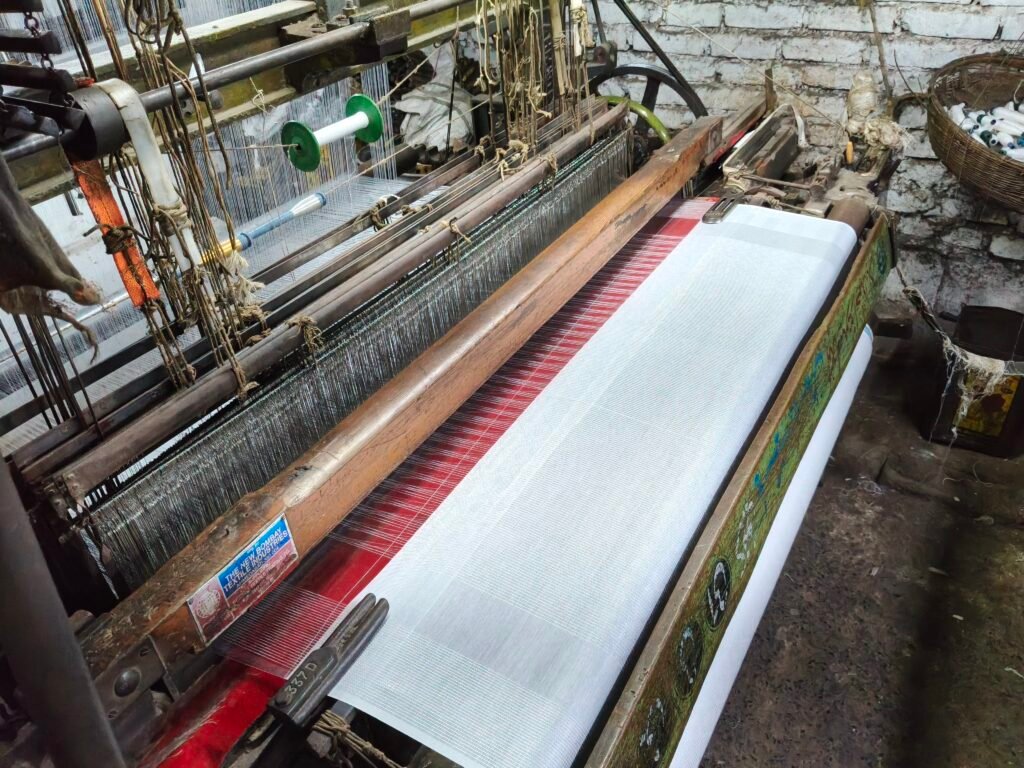
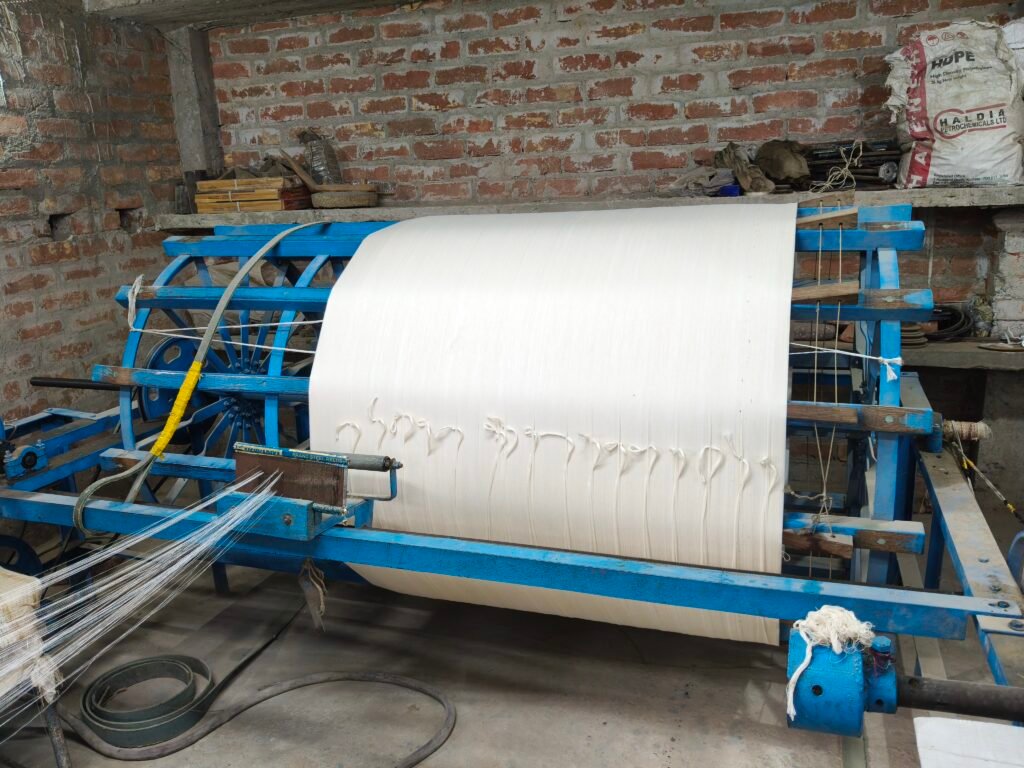
Handloom fabric is woven manually on traditional looms operated by skilled artisans. Because the process relies on human skill rather than machines, each fabric has a unique texture and natural variation.
Key Characteristics
- Handwoven by artisans
- Low electricity usage
- Natural slub and irregularity
- Small-batch production
- Strong artisan story
Handloom weaving is deeply rooted in Indian textile heritage, especially in regions like Bhagalpur, known globally for silk and linen.
⚙️ What Is Powerloom Fabric?
Powerloom fabric is woven using electrically operated looms. As a result, production becomes faster, more uniform, and easier to scale for bulk requirements.
Key Characteristics
- Machine-driven weaving
- Consistent texture
- Faster production
- Suitable for large volumes
- Lower per-unit cost
Powerloom fabrics are widely used for commercial and mass-market exports.
🧵 Key Differences: Handloom vs Powerloom Fabrics
| Factor | Handloom Fabrics | Powerloom Fabrics |
|---|---|---|
| Texture | Natural, uneven, artisanal | Smooth, uniform |
| Sustainability | Very high | Moderate |
| Electricity Use | Minimal | High |
| Production Speed | Slower | Faster |
| MOQ Flexibility | Flexible | Medium–High |
| Cost | Medium–High | Low–Medium |
| Brand Positioning | Premium / Ethical | Commercial |
| Best For | Luxury, slow fashion | Mass export |
🌿 Sustainability: Why Handloom Matters More in Global Markets
Today, European, Australian, and North American buyers strongly value sustainability. Because handloom weaving uses almost zero electricity and supports artisan livelihoods, it aligns perfectly with slow fashion and ethical sourcing goals.
Therefore, handloom fabrics work best for:
- Sustainable fashion brands
- Capsule collections
- Luxury and artisanal labels
- Conscious consumers
Powerloom fabrics, meanwhile, still serve an important role for cost-sensitive and volume-driven markets.
👗 Fabric Performance & End-Use Comparison
Handloom Works Best For:
- Linen sarees & garments
- Tussar, Ghicha & Muga silk
- Khadi jute & banana silk
- Premium cotton
- Embroidery-focused designs
Powerloom Works Best For:
- Plain cotton fabrics
- Printed base fabrics
- High-volume apparel
- Uniform fabric requirements
Choosing the correct loom type ensures better product performance and fewer buyer complaints.
🌍 Insight: What Different Markets Prefer
- Europe: Handloom linen, handloom silk, sustainable fabrics
- Australia & NZ: Handloom linen and cotton for summer wear
- Gulf Countries: Powerloom cotton & linen blends for bulk orders
- North America: Mix of handloom (premium) and powerloom (volume)
- South America: Powerloom cotton and blended fabrics
As a result, many international buyers choose a hybrid sourcing strategy.
❓ Buyer Questions Answered
Is handloom fabric better than powerloom?
Handloom is better for sustainability, texture, and premium branding. Powerloom is better for speed and volume.
Can handloom fabrics be exported in bulk?
Yes, but timelines are longer. Planning in advance is essential.
Which is more cost-effective for exports?
Powerloom fabrics are cheaper per unit, while handloom offers higher brand value.
🤝 How Weaveify Helps Buyers Choose the Right Option
Weaveify works with both handloom and powerloom units, allowing international buyers to source based on market needs—not limitations.
What Weaveify Offers
- Handloom linen, silk, cotton, khadi, banana silk
- Powerloom cotton & blended fabrics
- Digital printing & embroidery
- Flexible MOQ
- Export documentation support
- Ethical & transparent sourcing
👉 Contact Weaveify 👉 Explore sarees
👉 Explore fabrics 👉 Explore dress materials
🌍 External Reference
Indian Handloom & Textile Information
🎯 Conclusion
What should international buyers know about handloom vs powerloom fabrics?
Handloom fabrics offer sustainability, uniqueness, and premium value, while powerloom fabrics deliver speed, consistency, and scalability. Choosing the right option depends on market, price point, and brand positioning. Working with exporters like Weaveify ensures access to both—without compromise.